English
 Español
 tiếng việt
 русский
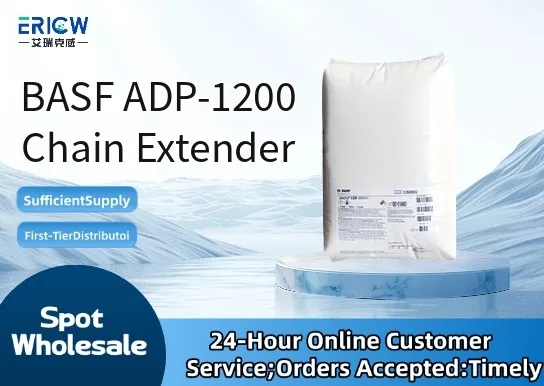
Highly reactive aromatic diamine-based chain extender for polyurethane and thermoplastic polyurethane (TPU) systems.
Enables excellent mechanical properties including high tensile strength, tear resistance, and abrasion resistance.
Offers improved processing stability and reduced viscosity during melt processing compared to conventional chain extenders.
Delivers superior thermal and hydrolytic stability in demanding end-use environments.
Compatible with a broad range of polyols and isocyanates, supporting flexible formulation design.
High-performance thermoplastic polyurethane (TPU) elastomers for automotive interior components.
Industrial hose and tubing requiring dynamic flexibility and long-term durability.
Footwear midsoles and outsoles demanding resilience, energy return, and fatigue resistance.
Roller coverings and industrial belts exposed to continuous mechanical stress.
3D printing filaments based on TPU for functional prototyping and end-use parts.
| Chemical Type | Aromatic diamine derivative |
| Product Form | Off-white to light tan crystalline solid |
| Appearance | Free-flowing granules or powder |
| Primary Applications | Chain extension in TPU, polyurea, and cast elastomer systems |
| Key Features | Reactive, low volatility, non-staining |
| Benefits | Enhanced hardness-toughness balance, improved processing window, reduced yellowing |
| Storage Conditions | Store in original sealed container at 15–25 °C, protect from moisture and direct sunlight |
| Handling Precautions | Use in well-ventilated areas; avoid inhalation of dust and skin contact |
Q1: What is the primary function of BASF ADP-1200 in polyurethane systems?
A: BASF ADP-1200 is a liquid aromatic diamine-based chain extender designed to react with isocyanates, enhancing polymer backbone rigidity, improving mechanical strength, and increasing thermal stability in thermoplastic and cast elastomer polyurethane formulations.
Q2: How does ADP-1200 compare to MOCA in terms of processing safety and handling?
A: Unlike MOCA, ADP-1200 is a non-crystalline liquid at room temperature, eliminating the need for high-temperature melting and reducing operator exposure risks. It also offers improved storage stability and simplified metering in automated mixing systems.
Q3: Is ADP-1200 suitable for applications requiring FDA compliance or food-contact approval?
A: ADP-1200 is not intended for direct food-contact applications and has not been evaluated against FDA or EU food-contact regulations. Customers requiring such approvals should consult BASF Technical Service for alternative solutions and regulatory support documentation.
Q4: What are typical dosage levels when using ADP-1200 in TPU or cast elastomer formulations?
A: Dosage depends on formulation requirements and desired performance profile, but ADP-1200 is typically used at low concentrations—generally ranging from 0.1% to 2% by weight relative to the total polyol–isocyanate system—to achieve optimal balance of hardness, tensile strength, and processability.
Q5: Does ADP-1200 require special storage or handling precautions?
A: Yes—ADP-1200 should be stored in tightly sealed containers under dry, inert conditions, protected from moisture and elevated temperatures. Prolonged exposure to air may lead to surface skinning or viscosity increase; pre-use agitation is recommended if sedimentation occurs.
Contact With Us:
E-mail: wangxingqiang@ericwchem.com
Have a Questions? Call Us:
Add:
Building A1, Jiete Industrial Park, Huangpu District, Guangzhou City, Guangdong Province, China