English
 Español
 tiếng việt
 русский
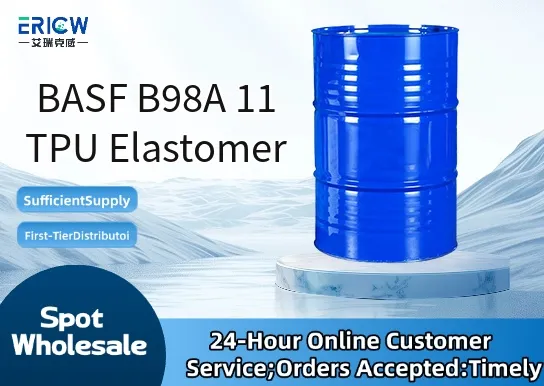
Excellent abrasion resistance for extended service life in demanding mechanical environments.
High tensile strength and elongation at break, enabling robust performance under dynamic stress.
Good low-temperature flexibility down to –30 °C, maintaining elasticity in cold-condition applications.
Outstanding processability via injection molding and extrusion, with consistent melt stability.
Hydrolysis-resistant formulation suitable for humid or wet-service conditions.
Automotive interior trim components including instrument panel skins and door inserts.
Industrial hoses and tubing requiring oil, ozone, and weather resistance.
Consumer electronics protective casings and wearable device straps.
Medical tubing and non-implantable fluid-handling components (ISO 10993-compatibility verified).
Footwear midsoles and outsole compounds for athletic and work footwear.
| Chemical Type | Aliphatic polyester-based thermoplastic polyurethane |
| Product Form | Pellets |
| Appearance | Translucent off-white granules |
| Primary Applications | Injection molding, extrusion, blow molding |
| Key Features | Abrasion resistance, hydrolytic stability, low-temperature flexibility |
| Benefits | Reduced part wear, reliable processing, compliance-ready for medical & automotive sectors |
| Density (g/cm³) | 1.18–1.20 (ASTM D792) |
| Melt Flow Index (g/10 min) | 12–16 (210 °C / 5 kg, ASTM D1238) |
Q1: What are the key processing advantages of BASF B98A 11 compared to conventional TPU grades?
A: BASF B98A 11 is specifically engineered for enhanced melt stability and lower viscosity at processing temperatures, enabling smoother extrusion and injection molding—particularly beneficial for thin-walled or highly detailed parts. Its optimized flow behavior reduces shear sensitivity and minimizes gel formation during extended thermal exposure.
Q2: Is BASF B98A 11 suitable for applications requiring hydrolysis resistance?
A: Yes—B98A 11 is an aliphatic polyester-based TPU with inherently improved resistance to hydrolytic degradation compared to standard polyester TPUs, especially under warm, humid conditions. Long-term performance remains robust in environments where moisture and elevated temperature coexist, though prolonged immersion in hot water may still require evaluation for specific end-use conditions.
Q3: Can BASF B98A 11 be overmolded onto common engineering plastics like PP, ABS, or PC?
A: It exhibits good adhesion to several thermoplastics when processed under appropriate mold temperature, melt temperature, and interfacial residence time conditions. Successful overmolding on polypropylene typically benefits from surface activation (e.g., flame or plasma treatment), while bonding to ABS and PC is often achieved without pretreatment—though compatibility should be confirmed via prototype trials due to formulation-dependent substrate additives.
Q4: How does the UV stability of BASF B98A 11 compare to aromatic TPUs?
A: As an aliphatic TPU, B98A 11 offers significantly superior UV resistance versus aromatic counterparts—exhibiting minimal yellowing and retained mechanical properties after extended outdoor exposure. For demanding long-term exterior applications, additional UV stabilizers may still be recommended depending on service life expectations and intensity of irradiation.
Contact With Us:
E-mail: wangxingqiang@ericwchem.com
Have a Questions? Call Us:
Add:
Building A1, Jiete Industrial Park, Huangpu District, Guangzhou City, Guangdong Province, China