English
 Español
 tiếng việt
 русский
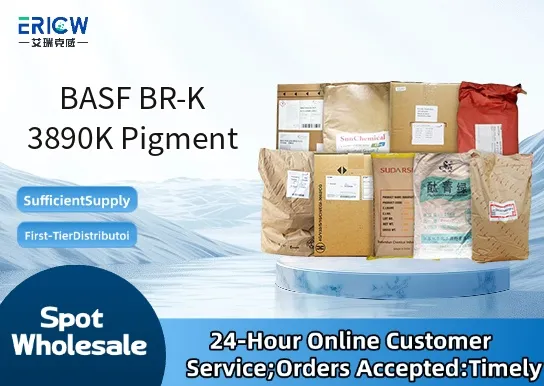
High chromatic strength and excellent color consistency in demanding pigment dispersions.
Outstanding thermal stability suitable for high-temperature processing up to 280 °C.
Good lightfastness and weather resistance, meeting ISO 105-B02 (Grade 7–8) requirements.
Low volatile organic compound (VOC) content, supporting sustainable formulation practices.
Optimized dispersibility in both polar and non-polar polymer matrices, including polyolefins and engineering plastics.
Coloration of polypropylene (PP) and polyethylene (PE) for automotive interior components.
Masterbatch production for food-contact-approved plastic packaging films.
Pigmenting engineering thermoplastics such as ABS and PC/ABS blends.
Industrial coatings requiring high UV stability and gloss retention.
Non-woven fibers and synthetic textiles requiring migration-resistant coloration.
| Chemical Type | Organic Pigment (Benzimidazolone derivative) |
| Product Form | Free-flowing granular powder |
| Appearance | Reddish-brown granules |
| Primary Applications | Polyolefins, engineering plastics, masterbatches, industrial coatings |
| Key Features | Thermal stability, dispersion efficiency, low extractables |
| Benefits | Consistent batch-to-batch color, reduced filtration effort, compliance with FDA 21 CFR §178.3297 |
| Density (23 °C) | 1.45–1.55 g/cm³ |
| Particle Size (D50) | 0.15–0.25 µm |
Q1: What is the primary application field for BASF BR-K 3890K Pigment?
A: BASF BR-K 3890K Pigment is specifically developed for use in high-performance industrial coatings, including automotive refinish and OEM coating systems, where excellent color strength, weather resistance, and thermal stability are required.
Q2: Is BR-K 3890K suitable for water-based coating formulations?
A: Yes, BR-K 3890K is engineered for compatibility with both solvent-borne and aqueous systems. Its surface treatment facilitates good dispersion stability and rheological behavior in water-based industrial coatings without requiring extensive reformulation.
Q3: How should BR-K 3890K be dispersed to achieve optimal performance?
A: Optimal dispersion is typically achieved using high-shear mixing or bead milling. Pre-wetting with compatible solvents or dispersing agents is recommended to ensure full deagglomeration and maximize color development and gloss retention.
Q4: Does BR-K 3890K offer good UV resistance and long-term color stability?
A: Yes, BR-K 3890K exhibits inherently high photostability due to its chemically robust molecular structure and optimized particle morphology, making it well-suited for exterior applications demanding sustained color fidelity under prolonged UV exposure.
Q5: What is the typical dosage range when using BR-K 3890K in coating systems?
A: Dosage depends on the desired opacity, color intensity, and formulation matrix, but BR-K 3890K is generally used at low concentrations—typically ranging from 0.1% to 2% by weight in the final coating—thanks to its high tinting strength and efficient light absorption.
Contact With Us:
E-mail: wangxingqiang@ericwchem.com
Have a Questions? Call Us:
Add:
Building A1, Jiete Industrial Park, Huangpu District, Guangzhou City, Guangdong Province, China