English
 Español
 tiếng việt
 русский
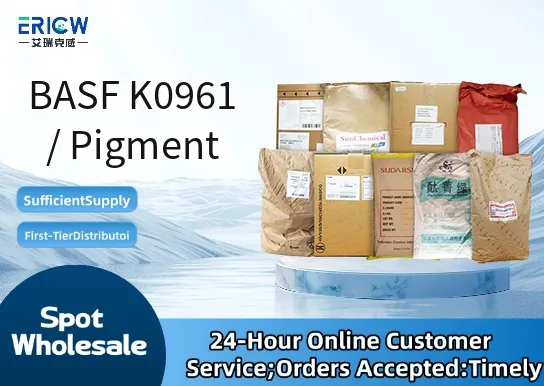
High chromatic strength with excellent color consistency across batches.
Outstanding thermal stability up to 220 °C, suitable for high-temperature processing.
Good dispersibility in both polar and non-polar polymer matrices.
Low migration tendency, ensuring color fastness in demanding end-use environments.
Compliant with major global regulatory frameworks including EU REACH and US FDA 21 CFR for selected applications.
Automotive interior plastics (dashboards, trim components).
Engineering thermoplastics such as polyamide (PA) and polybutylene terephthalate (PBT).
Household appliance housings requiring long-term UV and heat resistance.
Electrical and electronic enclosures where dimensional stability and color retention are critical.
Medical device housings meeting ISO 10993-compatibility requirements for non-invasive devices.
| Chemical Type | Organic pigment (high-performance azo derivative) |
| Product Form | Free-flowing granular powder |
| Appearance | Reddish-brown granules |
| Primary Applications | Plastics coloring (thermoplastics, engineering resins) |
| Key Features | Thermal stability, low volatility, excellent dispersion |
| Benefits | Reduced filter pressure build-up, minimal plate-out during extrusion |
| Regulatory Status | REACH registered; compliant with RoHS Directive (EU 2011/65/EU) |
| Storage Conditions | Store in dry, cool, well-ventilated area below 30 °C; protect from moisture |
Q1: What is the primary application field for BASF K0961/ Pigment?
A: BASF K0961/ Pigment is primarily designed for use in high-performance industrial coatings, including automotive refinish, coil coating, and general metal finishing systems where excellent color strength, lightfastness, and thermal stability are required.
Q2: Is BASF K0961/ Pigment suitable for water-based formulations?
A: Yes, BASF K0961/ Pigment demonstrates good dispersibility and stability in both solvent-borne and water-based systems when processed with appropriate dispersants and milling techniques. Performance may vary depending on formulation pH, ionic strength, and rheology modifiers.
Q3: How does BASF K0961/ Pigment perform under elevated temperature conditions?
A: This pigment exhibits good thermal stability and retains its chromatic properties during typical curing cycles used in industrial baking applications, including those up to 200 °C for short durations. Long-term exposure above 220 °C may affect performance depending on binder system and atmosphere.
Q4: What is the recommended dosage range for optimal color development?
A: Dosage depends on the target shade depth, substrate, and film thickness, but it is typically used at low concentrations—generally ranging from 0.1% to 2% by weight relative to total formulation solids—to achieve strong, uniform coloration without compromising dispersion stability or film integrity.
Contact With Us:
E-mail: wangxingqiang@ericwchem.com
Have a Questions? Call Us:
Add:
Building A1, Jiete Industrial Park, Huangpu District, Guangzhou City, Guangdong Province, China