English
 Español
 tiếng việt
 русский
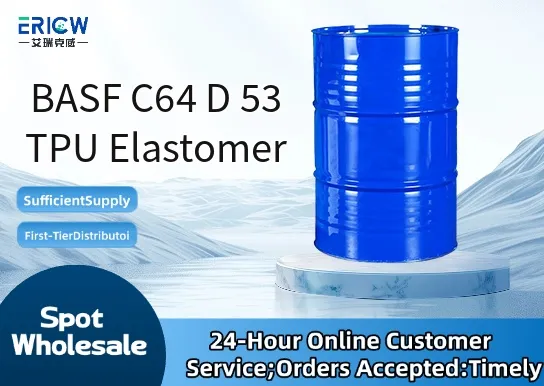
Excellent abrasion resistance for extended service life in demanding mechanical environments.
High tensile strength and elongation at break, enabling robust performance under dynamic stress.
Good low-temperature flexibility down to –30 °C, maintaining elasticity in cold-condition applications.
Outstanding oil and grease resistance, suitable for use in contact with hydrocarbon-based fluids.
Processable via standard thermoplastic methods including extrusion, injection molding, and calendering.
Industrial hoses and pneumatic tubing requiring high kink resistance and pressure stability.
Wear-resistant conveyor belts and scraper blades in material handling systems.
Automotive interior trim components such as gear knobs and soft-touch overlays.
Seals and gaskets for fluid handling systems exposed to oils and mild chemicals.
Technical profiles and flexible ducting in HVAC and compressed air distribution networks.
| Chemical Type | Thermoplastic Polyurethane (TPU), polyester-based |
| Product Form | Pellets |
| Appearance | Off-white to light beige, free-flowing granules |
| Primary Applications | Extruded profiles, molded parts, flexible tubing, industrial belts |
| Key Features | Abrasion resistance, oil resistance, low-temperature flexibility, melt-processability |
| Benefits | Reduced maintenance frequency, compatibility with existing TPU processing equipment, recyclable within closed-loop systems |
| Density (ISO 1183) | Approx. 1.20 g/cm³ |
| Melt Flow Index (ISO 1133, 230 °C/5 kg) | Approx. 12 g/10 min |
Q1: What is the primary application segment for BASF C64 D 53 TPU Elastomer?
A: BASF C64 D 53 is a thermoplastic polyurethane elastomer specifically engineered for demanding extrusion and injection molding applications, with strong suitability in automotive interior components, technical profiles, and soft-touch overmolding where consistent melt stability and surface aesthetics are critical.
Q2: How does C64 D 53 differ from other TPU grades in terms of processing behavior?
A: C64 D 53 offers enhanced melt homogeneity and reduced viscosity sensitivity across typical processing temperatures, enabling smoother extrusion of thin-walled profiles and improved flow into complex mold geometries without excessive shear heating or degradation risk.
Q3: Is this grade suitable for applications requiring long-term UV exposure?
A: While C64 D 53 provides inherent hydrolytic stability and good thermal resistance, it is not inherently UV-stabilized. For outdoor or extended UV-exposed applications, post-compounding with appropriate light stabilizers (e.g., HALS) is recommended to maintain mechanical integrity and surface appearance over time.
Q4: Can C64 D 53 be co-extruded with common engineering thermoplastics?
A: Yes — C64 D 53 demonstrates good interfacial adhesion with several polyolefins and engineering plastics such as PP and ABS when processed under optimized temperature and shear conditions, making it well-suited for multi-layer co-extrusion and structural bonding applications.
Contact With Us:
E-mail: wangxingqiang@ericwchem.com
Have a Questions? Call Us:
Add:
Building A1, Jiete Industrial Park, Huangpu District, Guangzhou City, Guangdong Province, China