English
 Español
 tiếng việt
 русский
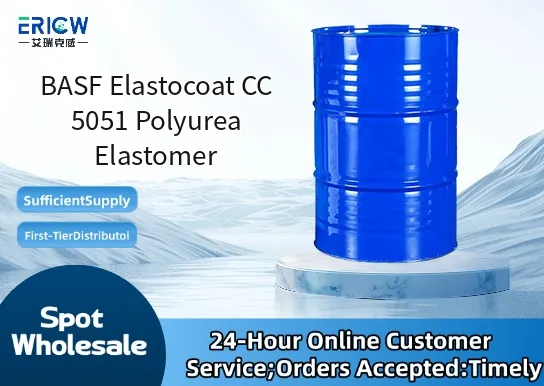
Ultra-fast curing — achieves handling strength in seconds and full cure within 24 hours at ambient conditions.
Exceptional abrasion and chemical resistance, including resistance to hydrocarbons, de-icing fluids, and diluted acids/bases.
High elongation (>300%) and tensile strength (>15 MPa) for superior crack-bridging and impact resilience.
100% solids formulation — zero VOCs, no solvents, and no isocyanate monomers in the final cured film.
Excellent adhesion to properly prepared concrete, steel, and aged polyurethane/polyurea substrates without primers.
Secondary containment linings for chemical storage tanks, bunds, and spill pallets.
Protective coatings for wastewater treatment infrastructure, including channels, clarifiers, and wet wells.
Heavy-duty flooring and ramp systems in industrial facilities, logistics centers, and aircraft hangars.
Bridge deck waterproofing and joint protection systems exposed to de-icing salts and traffic wear.
Roofing and plaza deck membranes requiring rapid return-to-service and long-term UV stability.
| Chemical Type | Aromatic spray-applied polyurea elastomer |
| Product Form | Two-component liquid system (A-side: isocyanate; B-side: amine-terminated resin blend) |
| Appearance (Uncured) | A-side: amber liquid; B-side: pale yellow to amber liquid |
| Primary Applications | Protective lining, waterproofing, and heavy-duty coating |
| Key Features | Fast cure, high elasticity, chemical resistance, 100% solids |
| Benefits | Reduced downtime, durable service life, low environmental impact, primerless adhesion |
| Curing Time (Tack-Free) | 5–15 seconds at 23°C / 73°F |
| Service Temperature Range | −40°C to +120°C (−40°F to +248°F) continuous |
Q1: What are the primary application methods for Elastocoat CC 5051?
A: Elastocoat CC 5051 is designed for high-pressure plural-component spray application using heated, impingement-mix equipment. It can also be applied via brush or roller for touch-up or small-area repairs, though full performance properties require proper spray processing conditions.
Q2: How does Elastocoat CC 5051 perform in extreme temperature environments?
A: As a fast-curing polyurea elastomer, CC 5051 maintains excellent low-temperature flexibility and high-temperature dimensional stability. It remains functional across a broad service temperature range and exhibits rapid cure even at ambient temperatures as low as 0 °C, provided substrate and material temperatures are adequately controlled.
Q3: Is surface preparation critical before applying Elastocoat CC 5051?
A: Yes — thorough surface preparation is essential. Substrates must be clean, dry, and free of contaminants such as oil, dust, and loosely adhering materials. Concrete surfaces typically require mechanical profiling (e.g., shot blasting or grinding), while steel requires abrasive blast cleaning to near-white metal (SSPC-SP 10/NACE No. 2) for optimal adhesion.
Q4: Can Elastocoat CC 5051 be overcoated with other coating systems?
A: Yes, it can serve as a robust base layer for compatible topcoats, including aliphatic polyurethanes and acrylics, provided the overcoat is chemically compatible and applied within the recommended recoat window. Adhesion testing under site-specific conditions is advised prior to full-scale overcoating.
Contact With Us:
E-mail: wangxingqiang@ericwchem.com
Have a Questions? Call Us:
Add:
Building A1, Jiete Industrial Park, Huangpu District, Guangzhou City, Guangdong Province, China