English
 Español
 tiếng việt
 русский
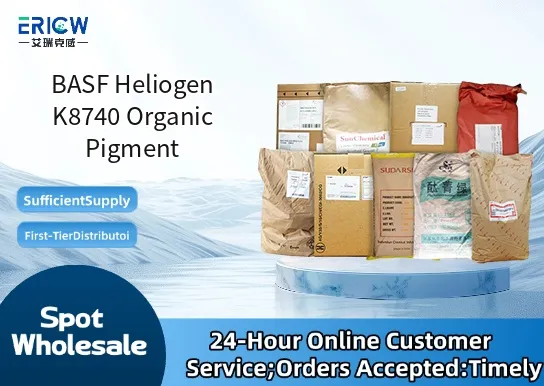
High thermal stability suitable for engineering plastics processing up to 280 °C.
Excellent lightfastness and weather resistance (DIN EN ISO 105-B02, Grade 7–8).
Outstanding chemical resistance to acids, alkalis, and solvents commonly used in industrial coatings.
Strong tinting strength and high chroma in blue-shade phthalocyanine hue.
Low volatility and negligible migration in polymer matrices, ensuring long-term color integrity.
Automotive exterior coatings requiring high durability and gloss retention.
Engineering thermoplastics including polyamide (PA), polybutylene terephthalate (PBT), and polycarbonate (PC).
Industrial maintenance coatings exposed to UV radiation and harsh environmental conditions.
Polyolefin masterbatches for outdoor applications such as agricultural films and construction profiles.
High-performance inks for packaging gravure and flexographic printing on laminated substrates.
| Chemical Type | Copper phthalocyanine derivative |
| Product Form | Free-flowing powder |
| Appearance | Intense greenish-blue crystalline powder |
| Primary Applications | Plastics, industrial coatings, inks |
| Key Features | Thermal stability, lightfastness, chemical resistance |
| Particle Size (D50) | Approx. 0.08–0.12 µm (by laser diffraction) |
| Volatile Matter (105 °C, 2 h) | ≤ 0.5 wt.% |
| Heavy Metals (Pb, Cd, Hg, Cr⁶⁺) | Compliant with EU ELV & RoHS directives |
Q1: What is the primary chemical class and key performance advantage of Heliogen K8740?
A: Heliogen K8740 is a high-performance perylene-based organic pigment, offering exceptional lightfastness, thermal stability, and resistance to migration in demanding polymer applications—particularly where long-term color integrity under heat and UV exposure is critical.
Q2: In which polymer systems is Heliogen K8740 most commonly processed?
A: It is widely used in engineering thermoplastics such as polyamide (PA), polybutylene terephthalate (PBT), and polyethylene terephthalate (PET), especially in injection-molded and extruded components requiring high-temperature processing stability and low pigment bleed.
Q3: Is Heliogen K8740 suitable for food-contact or regulatory-sensitive applications?
A: While not specifically designed or certified for direct food contact, Heliogen K8740 complies with general industrial pigment safety requirements and may be considered for indirect food-contact applications depending on final formulation, processing conditions, and applicable regional regulations—consult BASF for case-specific regulatory support documentation.
Q4: How does dispersion behavior compare to other high-stability perylene pigments?
A: Heliogen K8740 exhibits excellent dispersibility in molten polymers and shows low tendency toward agglomeration during high-shear compounding, contributing to uniform color development and reduced filter pressure build-up—especially when pre-compounded with compatible carrier resins.
Q5: What is the typical dosage range for achieving full chromatic strength in engineering plastics?
A: Dosage generally ranges from 0.1% to 2% by weight depending on the polymer matrix, required opacity or transparency, and processing method—lower concentrations are often sufficient due to its high tinctorial strength and efficient color development.
Contact With Us:
E-mail: wangxingqiang@ericwchem.com
Have a Questions? Call Us:
Add:
Building A1, Jiete Industrial Park, Huangpu District, Guangzhou City, Guangdong Province, China