English
 Español
 tiếng việt
 русский
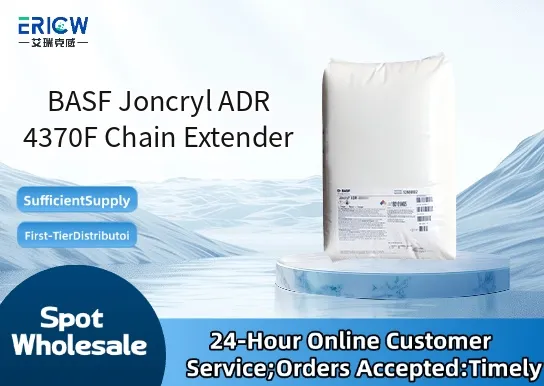
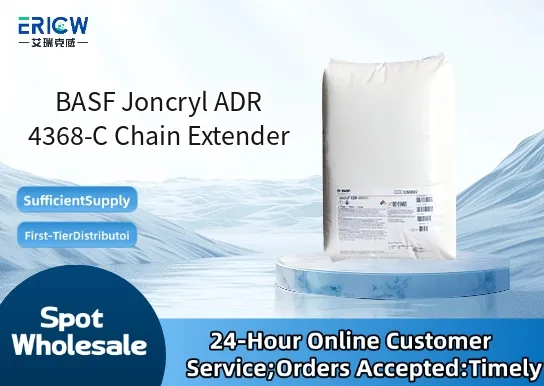
Highly efficient epoxy-functional chain extender for reactive modification of polyesters and polyacrylates.
Enables significant molecular weight build-up without gelation, even at low addition levels (typically 0.1–0.5 wt%).
Improves melt strength, melt viscosity, and thermo-mechanical stability in extrusion and compounding processes.
Compatible with a broad range of thermoplastic polymers including recycled PET, PLA, and PBT.
Supports circular economy goals by enhancing performance of post-consumer recycled (PCR) resins.
Enhancement of recycled PET (rPET) for food-contact packaging films and bottles.
Viscosity stabilization in biopolymer processing, especially polylactic acid (PLA) for thermoforming and blow molding.
Molecular weight repair in engineering thermoplastics during reprocessing or multi-pass extrusion.
Performance upgrading of polyacrylate-based adhesives and coatings requiring improved cohesive strength.
Chain extension in polyester-based thermoplastic elastomers (TPEE) to boost tensile properties and elasticity.
| Chemical Type | Epoxy-functional acrylic copolymer |
| Product Form | Pellets |
| Appearance | Off-white to light beige, free-flowing pellets |
| Primary Applications | Chain extension of polyesters, polyacrylates, and biopolymers |
| Key Features | Reactive functionality, low volatility, thermal stability up to 280 °C |
| Benefits | Improved melt strength, enhanced recyclate performance, reduced degradation during processing |
| Storage Conditions | Store in cool, dry place; protect from moisture and direct sunlight |
| Handling Precautions | Use in well-ventilated areas; avoid inhalation of dust; refer to SDS for full safety guidance |
Q1: What is the primary function of Joncryl ADR 4370F in acrylic and polyester resin systems?
A: Joncryl ADR 4370F is a multifunctional epoxy-functional chain extender designed to increase molecular weight and improve melt viscosity, mechanical strength, and thermal stability in thermoplastic acrylic and polyester resins—particularly in reactive extrusion and solvent-based coating formulations.
Q2: How does ADR 4370F differ from other Joncryl ADR chain extenders like ADR 4368 or ADR 4380?
A: ADR 4370F features a tailored epoxy functionality and molecular architecture optimized for balanced reactivity and processing stability in medium-to-high Tg acrylic systems. Compared to ADR 4368, it offers higher thermal robustness during melt processing; versus ADR 4380, it delivers more controlled viscosity build and improved compatibility with polar functional groups in polyester-acrylic hybrids.
Q3: Is Joncryl ADR 4370F suitable for food-contact compliant coatings?
A: While Joncryl ADR 4370F is not inherently restricted for food-contact use, final regulatory compliance depends on the full formulation, processing conditions, and end-use application. It is commonly used in industrial and decorative coatings where migration control and regulatory validation are managed at the system level—not as a standalone ingredient.
Q4: What processing methods are recommended for incorporating ADR 4370F into resin systems?
A: It is typically incorporated via high-shear melt compounding (e.g., twin-screw extrusion) or high-speed dispersion in solvent-based systems. Pre-blending with the base resin prior to thermal processing helps ensure uniform distribution and optimal reaction efficiency.
Q5: How should Joncryl ADR 4370F be stored to maintain performance stability?
A: Store in original sealed containers at temperatures between 5 °C and 30 °C, protected from moisture and direct sunlight. Prolonged exposure to humidity or elevated temperatures may lead to partial epoxy group hydrolysis and reduced reactivity.
Contact With Us:
E-mail: wangxingqiang@ericwchem.com
Have a Questions? Call Us:
Add:
Building A1, Jiete Industrial Park, Huangpu District, Guangzhou City, Guangdong Province, China