English
 Español
 tiếng việt
 русский
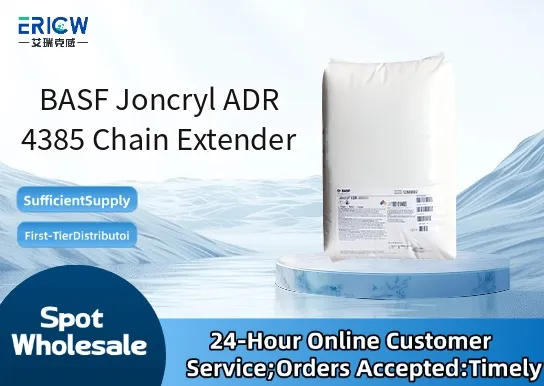
Multi-functional epoxy-based chain extender enabling efficient molecular weight build-up in reactive polymer systems.
Excellent compatibility with polyesters, polyacrylates, and acrylic dispersions without phase separation.
Enables low-temperature curing and improves melt viscosity control during extrusion or compounding.
Reduces gel content and enhances long-term storage stability of reactive resins and waterborne coatings.
Non-volatile, low-odor formulation supporting sustainable manufacturing and VOC-compliant formulations.
Waterborne acrylic and polyester dispersions for industrial coatings.
Reactive hot-melt adhesives requiring enhanced cohesive strength and heat resistance.
Recycled PET (rPET) and mixed-polymer blends to restore melt strength and processability.
UV-curable and hybrid coating systems where post-crosslinking reinforcement is critical.
Thermoplastic elastomer (TPE) formulations requiring improved tensile properties and elasticity retention.
| Chemical Type | Epoxy-functionalized multi-arm aliphatic oligomer |
| Product Form | Pale yellow to light amber viscous liquid |
| Appearance | Clear, homogeneous liquid at room temperature |
| Primary Applications | Chain extension, crosslinking, and rheology modification in reactive polymers |
| Key Features | Low volatility, high functionality, thermal stability up to 200 °C |
| Benefits | Improved mechanical performance, reduced processing defects, enhanced recyclate compatibility |
| Storage Stability | ≥12 months at 5–30 °C in sealed original container |
| Handling Precautions | Use in well-ventilated areas; avoid prolonged skin contact |
Q1: What is the primary function of Joncryl ADR 4385 in polymer systems?
A: Joncryl ADR 4385 is a multifunctional epoxy-based chain extender designed to increase molecular weight and improve melt strength, viscosity, and mechanical performance—particularly in recycled or degraded polyesters, polyacrylates, and other condensation polymers.
Q2: Which polymer types are most commonly modified using Joncryl ADR 4385?
A: It is widely used with PET, PBT, PLA, and acrylic resins—especially in applications involving post-consumer or post-industrial recycled content where chain scission has reduced molecular weight and processability.
Q3: How is Joncryl ADR 4385 typically incorporated into a formulation?
A: It is generally added during melt compounding—either directly with polymer pellets or pre-blended with masterbatch carriers—and is compatible with standard extrusion and injection molding equipment. Dosage depends on formulation requirements but is typically used at low concentrations to achieve targeted rheological and mechanical improvements.
Q4: Does Joncryl ADR 4385 affect thermal stability or color development during processing?
A: When processed within recommended temperature ranges and residence times, Joncryl ADR 4385 exhibits good thermal stability and minimal tendency toward yellowing—though prolonged exposure to excessive heat or moisture may influence final color, as with many epoxy-functional additives.
Contact With Us:
E-mail: wangxingqiang@ericwchem.com
Have a Questions? Call Us:
Add:
Building A1, Jiete Industrial Park, Huangpu District, Guangzhou City, Guangdong Province, China