English
 Español
 tiếng việt
 русский
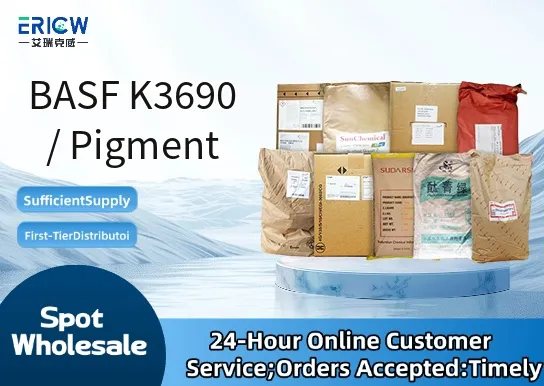
High chromatic strength with excellent tinting power in both polar and non-polar systems.
Outstanding thermal stability up to 280 °C, suitable for high-temperature polymer processing.
Good lightfastness (ISO 105-B02: Grade 7–8) and weather resistance in outdoor applications.
Low migration tendency in PVC, polyolefins, and engineering plastics.
Free-flowing powder form with consistent particle size distribution for reproducible dispersion.
Coloration of rigid and flexible PVC profiles, cables, and flooring.
Masterbatch production for polypropylene (PP) and polyethylene (PE) packaging films.
Engineering thermoplastics including ABS, PS, and PC for automotive interior components.
Coating systems for industrial metal finishes and coil coatings.
Ink formulations for gravure and flexographic printing on plastic substrates.
| Chemical Type | Organic Pigment (Benzimidazolone derivative) |
| Product Form | Free-flowing dry powder |
| Appearance | Reddish-brown fine powder |
| Primary Applications | Polymer coloration, industrial coatings, printing inks |
| Key Features | Thermal stability, low migration, high dispersibility |
| Benefits | Consistent batch-to-batch color match, reduced dosage requirement |
| Regulatory Compliance | REACH registered; compliant with EU Directive 2002/61/EC for colorants |
| Storage Conditions | Store in cool, dry place below 30 °C; protect from moisture and direct sunlight |
Q1: What is the primary function of BASF K3690/Pigment in polymer systems?
A: BASF K3690/Pigment is a high-performance organic pigment dispersion designed to provide strong, consistent coloration and excellent lightfastness in thermoplastic polymers—particularly polyolefins and engineering plastics—without compromising melt stability or mechanical properties.
Q2: Is BASF K3690/Pigment suitable for food-contact applications?
A: While BASF K3690/Pigment is formulated with high-purity components and is widely used in applications requiring regulatory compliance, its suitability for food-contact use depends on the final formulation, processing conditions, and applicable regional regulations. Customers must conduct full regulatory assessment and migration testing as part of their own compliance process.
Q3: How should BASF K3690/Pigment be incorporated into polymer melts?
A: It is typically introduced via masterbatch dilution or direct feeding into extrusion processes. Good dispersion is achieved under standard melt-mixing conditions; extended residence time or excessive shear is not required. Pre-drying is generally unnecessary unless ambient humidity is exceptionally high.
Q4: Does BASF K3690/Pigment exhibit good thermal stability during processing?
A: Yes—it is engineered for robust thermal stability in typical polymer processing windows, including extrusion and injection molding of polyolefins and styrenics. Color consistency is maintained up to temperatures commonly encountered in these operations, though prolonged exposure above recommended limits may affect hue intensity.
Contact With Us:
E-mail: wangxingqiang@ericwchem.com
Have a Questions? Call Us:
Add:
Building A1, Jiete Industrial Park, Huangpu District, Guangzhou City, Guangdong Province, China