English
 Español
 tiếng việt
 русский
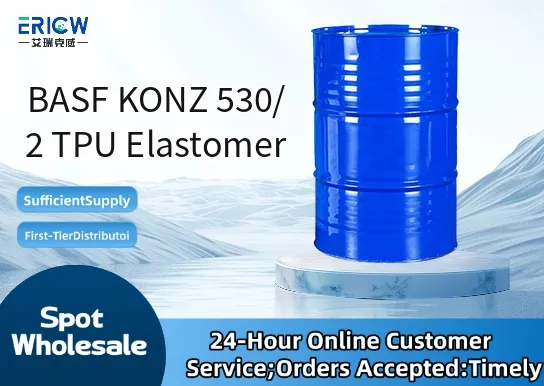
Excellent abrasion resistance for extended service life in demanding mechanical environments.
Outstanding flexibility and low-temperature toughness down to –40 °C.
Good processability via injection molding and extrusion with minimal thermal degradation.
High tensile strength and elongation at break, enabling robust dynamic performance.
Hydrolysis-resistant formulation suitable for humid or wet-condition applications.
Automotive interior trim components including instrument panel overlays and gear shift boots.
Industrial hoses and pneumatic tubing requiring flexibility and pressure resistance.
Consumer electronics protective casings and soft-touch overmolded grips.
Medical device tubing and non-implantable elastomeric components compliant with ISO 10993-5.
Footwear midsoles and outsole compounds balancing cushioning and wear resistance.
| Chemical Type | Thermoplastic Polyurethane (TPU), polyester-based |
| Product Form | Pellets |
| Appearance | Off-white to light beige granules |
| Primary Applications | Overmolding, extrusion, injection molding |
| Key Features | Abrasion resistance, low-temperature flexibility, hydrolysis stability |
| Processing Temperature Range | 180–220 °C (barrel) |
| Density (ISO 1183) | 1.18–1.20 g/cm³ |
| Melt Flow Index (ISO 1133, 230 °C/5 kg) | 10–14 g/10 min |
Q1: What is the primary function of BASF KONZ 530/2 in TPU formulations?
A: KONZ 530/2 is a specialized processing aid designed to improve melt flow and reduce extrusion pressure during TPU compounding and shaping. It helps enhance surface finish, minimize die build-up, and support consistent throughput in extrusion and injection molding operations.
Q2: Is KONZ 530/2 compatible with all common TPU types (e.g., polyester-, polyether-, and polycaprolactone-based)?
A: Yes — KONZ 530/2 has demonstrated broad compatibility across major TPU chemistries. It is particularly effective in medium-to-high viscosity grades and shows stable dispersion without compromising mechanical properties or long-term elastomeric performance.
Q3: How should KONZ 530/2 be incorporated into TPU processing?
A: It is typically added directly to the TPU resin prior to extrusion or injection molding — either via gravimetric feeding, tumble blending, or masterbatch dilution. Pre-drying of the additive is not required, but uniform distribution is recommended to ensure optimal effect.
Q4: Does KONZ 530/2 affect the final TPU’s physical properties such as tensile strength or elasticity?
A: When used within the recommended dosage range, KONZ 530/2 does not significantly alter key mechanical or dynamic properties. Minor reductions in modulus may occur at higher loadings, but overall elastomeric behavior, resilience, and elongation remain well preserved.
Q5: Can KONZ 530/2 be used in applications requiring food contact or medical-grade compliance?
A: KONZ 530/2 is not pre-qualified for food-contact or medical applications. Its suitability for such uses depends on full formulation evaluation, regulatory review, and end-product testing under applicable regional requirements. Customers must conduct their own due diligence and validation.
Contact With Us:
E-mail: wangxingqiang@ericwchem.com
Have a Questions? Call Us:
Add:
Building A1, Jiete Industrial Park, Huangpu District, Guangzhou City, Guangdong Province, China