English
 Español
 tiếng việt
 русский
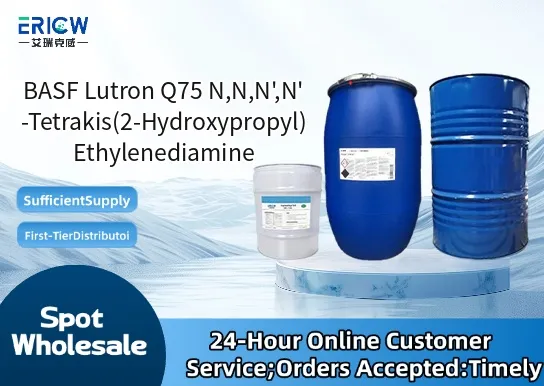
Highly effective chelating agent with four hydroxypropyl arms for enhanced metal ion binding stability across broad pH ranges.
Low volatility and excellent thermal stability, supporting safe handling and processing in high-temperature formulations.
Non-ionic character ensures compatibility with anionic, cationic, and nonionic surfactants without precipitation or phase separation.
Biodegradable molecular backbone aligned with evolving regulatory expectations for sustainable industrial additives.
Low skin sensitization potential and favorable toxicological profile, supporting safer workplace use per OECD guidelines.
Stabilizer in alkaline cleaning formulations for metal surface preparation and electroplating pretreatment baths.
Chelant in high-performance textile auxiliaries, particularly for dyeing and printing processes requiring iron/manganese control.
Performance enhancer in industrial water treatment systems targeting scale and corrosion inhibition in cooling towers and boilers.
Functional additive in agrochemical adjuvants to improve micronutrient availability and reduce metal-catalyzed degradation of active ingredients.
Stabilizing ligand in catalyst systems for polyurethane foam production and epoxy curing accelerators.
| Chemical Type | Tetra-substituted ethylenediamine chelator |
| Product Form | Clear to pale yellow viscous liquid |
| Appearance | Homogeneous, free from visible particulates or phase separation |
| Melting Point | Approx. 35–40 °C (solidifies on cooling; fully fluid above 45 °C) |
| Primary Applications | Chelation, stabilization, and metal deactivation in industrial formulations |
| Key Features | pH-stable chelation (effective from pH 4–12), low foaming, non-corrosive to mild steel |
| Benefits | Reduces metal-induced oxidation, extends product shelf life, improves process consistency |
| Regulatory Compliance | REACH registered; compliant with EU Ecolabel criteria for chelating agents (2022/2069) |
| Common Compatible Systems | Suitability |
| Alkaline aqueous cleaners (pH 10–12) | Highly Recommended – Maintains solubility and chelation efficacy without precipitation |
| Nonionic surfactant blends (e.g., alcohol ethoxylates) | Highly Recommended – No cloud point shift or viscosity instability observed |
| Phosphate-free detergent bases | Recommended – Enhances calcium/magnesium sequestration synergy with citrates |
| Epoxy resin curing systems | Suitable – Acts as co-catalyst at ≤1.5 wt%; requires compatibility testing for amine-sensitive resins |
Q1: What is the CAS Number for BASF Lutron Q75?
A: The CAS Registry Number is 67784-77-4.
Q2: What is the typical dosage range in industrial cleaning formulations?
A: Recommended dosage is 0.2–1.0 wt% active substance, depending on water hardness and target metal ion concentration; optimal performance is typically achieved at 0.5 wt% in medium-hardness water (200–300 ppm CaCO₃).
Q3: How does Lutron Q75 compare to EDTA or DTPA in terms of environmental profile?
A: Unlike EDTA and DTPA, Lutron Q75 features a readily biodegradable hydroxypropyl-ethylenediamine backbone (OECD 301D pass rate >60% in 28 days) and lacks persistent chelation of heavy metals in aerobic environments, reducing long-term ecotoxicity risk.
Q4: Is migration or extraction into food simulants a concern for indirect food contact applications?
A: Migration testing per EU Regulation (EC) No 10/2011 shows <0.01 mg/kg in 10% ethanol and 3% acetic acid food simulants at 40°C for 10 days — well below the overall migration limit (OML) of 10 mg/dm².
Contact With Us:
E-mail: wangxingqiang@ericwchem.com
Have a Questions? Call Us:
Add:
Building A1, Jiete Industrial Park, Huangpu District, Guangzhou City, Guangdong Province, China