English
 Español
 tiếng việt
 русский
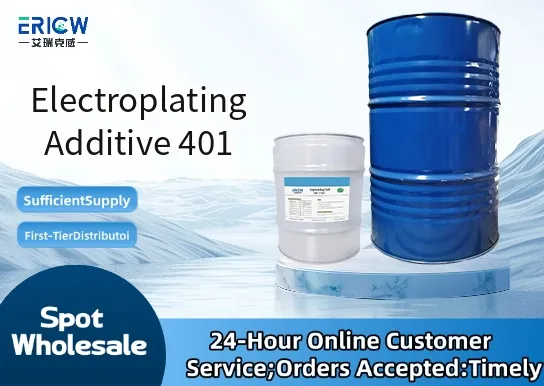
Enhances cathode efficiency and improves current distribution for uniform metal deposition.
Delivers exceptional brightening and leveling performance in acid copper plating baths.
Stabilizes bath chemistry under high-current-density operating conditions.
Minimizes organic breakdown products, extending electrolyte service life.
Compatible with automated dosing systems and supports real-time process control.
PCB (Printed Circuit Board) through-hole and surface trace copper plating.
Electroplated copper undercoats for decorative chromium and nickel-chromium finishes.
High-reliability interconnects in semiconductor packaging substrates.
Copper plating of automotive sensor housings and precision connectors.
Functional copper layers in MEMS and microelectronics fabrication.
| Chemical Type | Sulfonated aromatic compound blend with proprietary synergists |
| Product Form | Aqueous liquid concentrate (non-volatile) |
| Appearance | Clear to slightly hazy amber liquid |
| pH (1% aqueous solution) | 5.8 – 6.4 at 25°C |
| Density (20°C) | 1.08 – 1.12 g/cm³ |
| Primary Applications | Acid copper electroplating (H₂SO₄/CuSO₄-based baths) |
| Key Features | Brightener, leveler, and ductility enhancer in one formulation |
| Regulatory Compliance | REACH SVHC-free; RoHS 3 compliant; no intentionally added PFAS |
| Common Compatible Systems | Suitability |
| Standard Acid Copper Sulfate Baths (e.g., Technic Cu-Bath, Atotech CUBRIT) | Highly Recommended – Optimized for standard operating parameters (50–250 g/L H₂SO₄, 20–25 g/L Cu²⁺) |
| High-Speed PCB Plating Lines (e.g., MacDermid Alpha SpeedFILM™) | Recommended – Requires minor adjustment of carrier/brightener ratio for optimal throwing power |
| Mixed-Additive Systems with Polyethylene Glycol (PEG) carriers | Suitable – Demonstrates stable interaction without precipitation or haze formation |
| Recycled Electrolytes with <5 ppm chloride | Recommended – Maintains performance stability with effective chloride scavenging |
Q1: What is the CAS Registry Number for Electroplating Additive 401?
A: Electroplating Additive 401 is a proprietary multi-component formulation; individual CAS numbers are not assigned to the final product. Component CAS numbers are available under NDA upon request.
Q2: What is the typical working concentration range in an acid copper bath?
A: Standard dosage is 0.5–2.0 mL/L, adjusted based on bath loading, temperature, and desired deposit properties; continuous monitoring via CVS (Cyclic Voltammetric Stripping) is recommended.
Q3: How does Additive 401 compare to conventional SPS/PEG/DPS systems?
A: Additive 401 integrates leveling and brightening functions into a single stabilized system, reducing additive interaction complexity and improving bath predictability versus traditional three-component approaches.
Q4: Is Electroplating Additive 401 compliant with food-contact or potable water regulations?
A: It is not intended for direct food-contact or potable water applications. Final plated parts must undergo full migration testing per FDA 21 CFR §175.300 or EU 10/2011 if used in regulated end-use environments.
Contact With Us:
E-mail: wangxingqiang@ericwchem.com
Have a Questions? Call Us:
Add:
Building A1, Jiete Industrial Park, Huangpu District, Guangzhou City, Guangdong Province, China