English
 Español
 tiếng việt
 русский
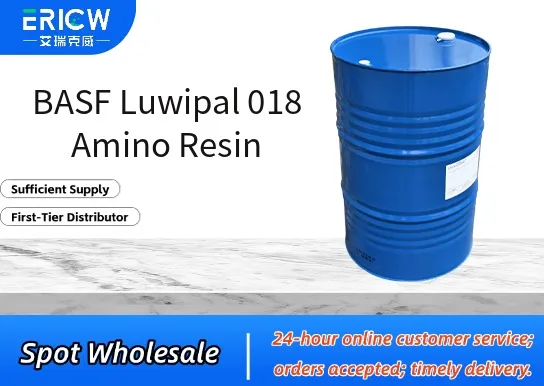
High reactivity with hydroxyl-functional resins, enabling fast cure at low to medium temperatures.
Excellent compatibility with alkyds, polyesters, and acrylics for homogeneous coating formulations.
Low formaldehyde emission profile, supporting sustainable formulation development.
Good storage stability in solvent-based systems without premature gelation.
Provides outstanding hardness, chemical resistance, and gloss retention in thermoset coatings.
Automotive OEM and refinish topcoats requiring rapid through-cure.
Industrial coil coatings for metal substrates with high line-speed requirements.
General-purpose can and container coatings for food and beverage packaging.
Wood furniture and panel finishes demanding high scratch and solvent resistance.
Appliance coatings where durability and aesthetic performance are critical.
| Chemical Type | Methanol-modified melamine-formaldehyde resin |
| Product Form | Liquid, solvent-based (n-butanol / xylene blend) |
| Appearance | Clear, pale yellow liquid |
| Solids Content (wt. %) | 55–60% |
| Viscosity (25 °C, mPa·s) | 1,200–2,500 |
| Acid Number (mg KOH/g) | < 5 |
| Density (20 °C, g/cm³) | 1.03–1.06 |
| Primary Applications | Crosslinker for hydroxyl-functional resin systems |
Q1: What is the primary function of Luwipal 018 in coating formulations?
A: Luwipal 018 functions as a crosslinking agent, primarily enhancing hardness, chemical resistance, and thermal stability in thermosetting acrylic, polyester, and alkyd-based coatings. It reacts with hydroxyl or carboxyl groups under heat to form durable, three-dimensional networks.
Q2: Is Luwipal 018 suitable for low-bake or ambient-cure systems?
A: Luwipal 018 is designed for medium- to high-temperature curing (typically 120–160 °C), and is not recommended for true ambient-cure applications. Catalysts such as weak organic acids may extend its reactivity at lower temperatures, but full performance requires thermal activation.
Q3: How does Luwipal 018 compare to melamine-formaldehyde resins in terms of formaldehyde release?
A: As a partially methylated amino resin, Luwipal 018 exhibits lower free formaldehyde content compared to conventional high-methylol melamine resins. Its formulation inherently limits volatile formaldehyde emissions during storage and processing, supporting improved workplace safety and compliance with general industrial hygiene guidelines.
Q4: Can Luwipal 018 be used in waterborne systems?
A: Yes — Luwipal 018 is compatible with many waterborne acrylic and polyester dispersions. It is typically added post-emulsification and requires careful pH control (generally between 7.5 and 9.0) to ensure colloidal stability and avoid premature reaction or coagulation.
Contact With Us:
E-mail: wangxingqiang@ericwchem.com
Have a Questions? Call Us:
Add:
Building A1, Jiete Industrial Park, Huangpu District, Guangzhou City, Guangdong Province, China