English
 Español
 tiếng việt
 русский
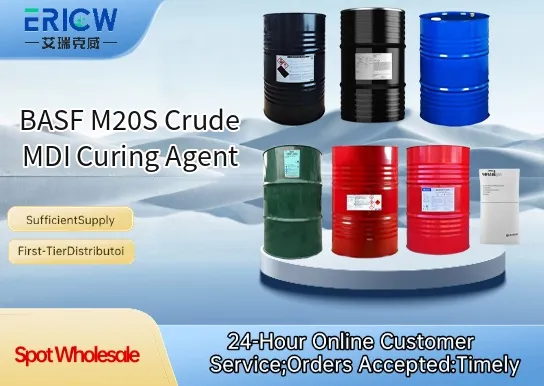
High functionality crude MDI composition with balanced NCO content for controlled reactivity in polyurethane systems.
Excellent compatibility with polyester and polyether polyols, enabling uniform phase mixing and stable formulation.
Low monomeric MDI (4,4'-MDI) content, supporting improved handling safety and reduced vapor pressure during processing.
Consistent batch-to-batch performance, ensuring reliable cure kinetics and mechanical property reproducibility.
Optimized for ambient- and elevated-temperature curing applications without requiring excessive catalyst loading.
Rigid polyurethane foam for insulation panels and refrigeration equipment.
Structural adhesives and laminating systems in automotive and transportation composites.
Coatings and elastomers requiring high crosslink density and chemical resistance.
Reaction injection molding (RIM) and structural foam components for industrial enclosures.
Sealants and gasketing materials used in construction and HVAC applications.
| Chemical Type | Crude diphenylmethane diisocyanate (MDI) mixture |
| Product Form | Liquid |
| Appearance | Pale yellow to amber clear liquid |
| NCO Content (wt %) | 30.5 – 32.0 |
| Viscosity at 25°C (mPa·s) | 150 – 250 |
| Acidity (as HCl, wt %) | ≤ 0.02 |
| Water Content (wt %) | ≤ 0.05 |
| Storage Stability | Stable for ≥12 months at <25°C in sealed, dry conditions |
Q1: What is the primary function of BASF M20S Crude MDI in polyurethane systems?
A: BASF M20S Crude MDI serves as a highly reactive aromatic isocyanate curing agent, primarily used to crosslink polyol-based resins in thermosetting polyurethane formulations—enabling rapid gelation, high thermal stability, and robust mechanical performance in cast elastomers, adhesives, and reaction injection molding (RIM) applications.
Q2: How does M20S differ from purified or monomeric MDI grades?
A: Unlike monomeric MDI, M20S is a crude MDI mixture containing a distribution of diisocyanate isomers (primarily 4,4'-MDI) along with higher molecular weight polymeric MDI fractions. This composition provides enhanced reactivity balance, improved melt flow for processing, and greater formulation flexibility—especially in systems requiring controlled pot life and elevated green strength.
Q3: Is M20S suitable for moisture-sensitive applications?
A: Due to its inherent reactivity with moisture, M20S must be handled under dry, inert conditions (e.g., nitrogen blanket) and stored in sealed containers. While not recommended for ambient-cure, high-humidity environments without strict process control, it is widely used in controlled industrial settings where moisture ingress is minimized during mixing and casting.
Q4: What types of polyols are commonly compatible with M20S?
A: M20S demonstrates broad compatibility with polyester polyols, polyether polyols (including both conventional and low-moisture variants), and polycarbonate diols. Optimal performance is typically achieved with medium-to-high functionality polyols that support efficient network formation and tailored hardness or elasticity profiles.
Q5: How should M20S be dosed in a typical PU formulation?
A: Dosage depends on formulation requirements—including desired crosslink density, final part properties, and processing window—but M20S is typically used at low concentrations relative to total resin solids, generally ranging from 0.1% to 2% by weight in two-component systems where it functions as the curing agent component.
Contact With Us:
E-mail: wangxingqiang@ericwchem.com
Have a Questions? Call Us:
Add:
Building A1, Jiete Industrial Park, Huangpu District, Guangzhou City, Guangdong Province, China