English
 Español
 tiếng việt
 русский
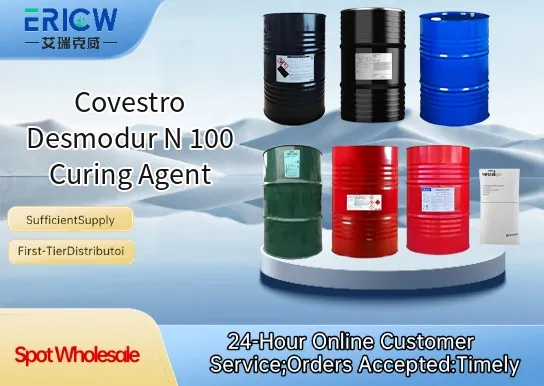
Highly reactive aliphatic polyisocyanate based on hexamethylene diisocyanate (HDI) trimer.
Excellent weather resistance and UV stability — ideal for outdoor applications requiring long-term gloss and color retention.
Low volatility and low free HDI monomer content (< 0.5%), supporting safer handling and compliance with stringent occupational health standards.
Good compatibility with a wide range of hydroxyl-functional resins including polyesters, acrylics, and polyethers.
Enables formulation of high-performance, two-component (2K) polyurethane coatings with outstanding mechanical properties and chemical resistance.
Automotive clearcoats and basecoats requiring exceptional durability and optical clarity.
Industrial maintenance coatings for machinery, agricultural equipment, and rail vehicles.
Architectural façade and cladding coatings exposed to harsh environmental conditions.
Plastic coatings for automotive interior trim and consumer electronics housings.
| Chemical Type | Aliphatic HDI-based polyisocyanate (trimer) |
| Product Form | Liquid |
| Appearance | Colorless to pale yellow, transparent liquid |
| NCO Content (wt %) | Approx. 21.5–22.5% |
| Viscosity at 25 °C (mPa·s) | Approx. 1,000–1,400 |
| Density at 20 °C (g/cm³) | Approx. 1.21–1.23 |
| Free HDI Monomer (wt %) | < 0.5% |
| Storage Stability | Stable under dry, cool conditions (≤ 25 °C); protect from moisture |
Q1: What is Desmodur N 100, and how does it function as a curing agent?
A: Desmodur N 100 is a low-viscosity aliphatic polyisocyanate based on hexamethylene diisocyanate (HDI) trimer. It serves as a crosslinking agent in two-component polyurethane systems, reacting with hydroxyl-functional resins to form durable, flexible, and weather-resistant coatings and elastomers.
Q2: Which resin types is Desmodur N 100 typically compatible with?
A: It is widely used with hydroxyl-terminated acrylics, polyesters, and polyethers in solventborne, high-solids, and some water-reducible PU systems. Compatibility and reactivity should be verified experimentally for each specific formulation due to variations in resin functionality and molecular weight.
Q3: How should Desmodur N 100 be stored and handled to maintain stability?
A: Store in tightly sealed containers under dry, cool conditions (typically below 30 °C) and protect from moisture, heat, and direct sunlight. Prolonged exposure to humidity may cause gelation or viscosity increase due to reaction with ambient moisture. Always use dry, clean equipment during handling.
Q4: Does Desmodur N 100 require a catalyst to achieve full cure?
A: While it cures readily at ambient or elevated temperatures without mandatory catalysis, tin-based catalysts (e.g., dibutyltin dilaurate) or tertiary amines may be added to accelerate gel time or improve through-cure—especially in thick films or low-temperature applications. Catalyst selection and dosage depend on the desired processing window and end-use performance requirements.
Contact With Us:
E-mail: wangxingqiang@ericwchem.com
Have a Questions? Call Us:
Add:
Building A1, Jiete Industrial Park, Huangpu District, Guangzhou City, Guangdong Province, China