English
 Español
 tiếng việt
 русский
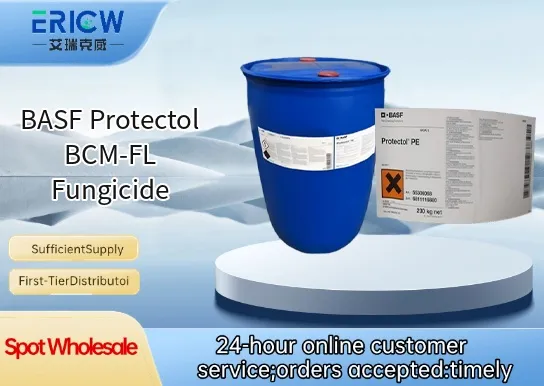
Broad-spectrum efficacy against key wood-decaying fungi, including *Coniophora puteana*, *Poria vaillantii*, and *Trametes versicolor*.
Low volatility and excellent leach resistance, ensuring long-term protection in exterior and ground-contact applications.
Compatible with common wood preservative systems and co-formulatable with copper-based biocides for synergistic performance.
Non-staining formulation suitable for light-colored or premium-grade timber without compromising aesthetic integrity.
Meets EN 113 and EN 84 standards for fungicidal efficacy in treated wood under European regulatory frameworks.
Pressure-treated softwood for outdoor construction (e.g., decking, fencing, utility poles).
Preservation of joinery timber used in windows, doors, and structural framing exposed to high humidity.
Protection of engineered wood products such as glulam beams and LVL panels in residential and commercial buildings.
Supplemental treatment for remedial wood repair systems targeting fungal decay in historic or renovation projects.
| Chemical Type | Benzimidazole derivative (carbendazim-based) |
| Product Form | Liquid concentrate (water-miscible) |
| Appearance | Pale yellow to amber clear liquid |
| pH (1% aqueous solution) | 6.0 – 7.5 |
| Density (20 °C) | 1.08 – 1.12 g/cm³ |
| Solubility in Water | Freely miscible |
| Primary Applications | Wood preservation (industrial and remedial) |
| Key Features | Fungistatic and fungicidal activity; low mammalian toxicity; stable in alkaline preservative matrices |
Q1: What is the primary mode of action of Protectol BCM-FL?
A: Protectol BCM-FL functions as a broad-spectrum fungicide with protective and preventive activity, primarily inhibiting fungal cell membrane synthesis through interference with ergosterol biosynthesis pathways.
Q2: In which types of industrial formulations is Protectol BCM-FL commonly used?
A: It is widely incorporated into water-based coatings, adhesives, sealants, construction materials, and polymer dispersions where long-term protection against mold, mildew, and saprophytic fungi is required during storage and in-service use.
Q3: Is Protectol BCM-FL compatible with common formulation additives?
A: Yes — it demonstrates good compatibility with typical surfactants, thickeners, pH adjusters, and co-biocides used in industrial aqueous systems, though compatibility testing under actual formulation conditions is recommended prior to full-scale implementation.
Q4: How should Protectol BCM-FL be handled to ensure optimal stability and performance?
A: Store in original sealed containers at temperatures between 5 °C and 30 °C, away from direct sunlight and strong oxidizing agents. Avoid prolonged exposure to extreme pH or high shear conditions during incorporation to maintain efficacy.
Contact With Us:
E-mail: wangxingqiang@ericwchem.com
Have a Questions? Call Us:
Add:
Building A1, Jiete Industrial Park, Huangpu District, Guangzhou City, Guangdong Province, China