English
 Español
 tiếng việt
 русский
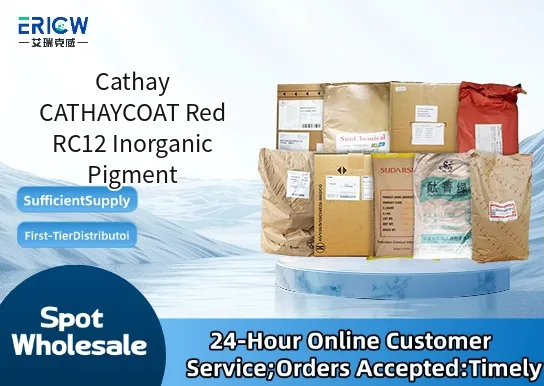
High thermal stability up to 800 °C, suitable for high-temperature ceramic and enamel applications.
Excellent lightfastness and weather resistance, maintaining color integrity under prolonged UV exposure.
Non-toxic composition compliant with global regulatory standards including REACH and RoHS.
Superior chemical inertness—resistant to acids, alkalis, and solvents in industrial coating systems.
Consistent particle size distribution ensuring smooth dispersion and uniform color development.
Ceramic glazes and underglaze decorations for tableware and architectural tiles.
High-performance enamel coatings on cookware, heaters, and industrial appliances.
Colorants in inorganic-based architectural coatings and fire-resistant paints.
Pigmentation of refractory materials and heat-resistant mortars.
Functional coloring agent in glass frits and low-expansion borosilicate glass formulations.
| Chemical Type | Mixed-metal oxide (iron-chromium-cobalt spinel) |
| Product Form | Free-flowing fine powder |
| Appearance | Brilliant reddish-brown powder |
| Primary Applications | Ceramics, enamels, refractories, architectural coatings |
| Key Features | Thermal stability, UV resistance, non-volatility, pH neutrality |
| Benefits | Color consistency at high firing temperatures, low dosage requirement, minimal batch variation |
| Density (g/cm³) | 4.2–4.5 |
| Particle Size (D₅₀, µm) | 1.8–2.2 |
Q1: What is the primary chemical composition of Cathay CATHAYCOAT Red RC12?
A: Cathay CATHAYCOAT Red RC12 is a high-performance inorganic red pigment based on a stabilized iron oxide–chromium oxide composite system, engineered for thermal and chemical stability in demanding industrial coatings.
Q2: Is RC12 suitable for high-temperature curing applications, such as coil coating or powder coating?
A: Yes — RC12 exhibits excellent thermal stability and retains its color integrity under continuous exposure up to 400 °C, making it well-suited for high-bake systems including metal coil coatings, automotive refinish primers, and thermoset powder formulations.
Q3: How does RC12 compare to organic red pigments in terms of weather resistance and UV stability?
A: As an inorganic pigment, RC12 offers significantly superior UV resistance, chalking resistance, and long-term color retention compared to most organic reds—particularly in exterior architectural and industrial maintenance coatings exposed to prolonged sunlight and moisture.
Q4: Can RC12 be used in waterborne industrial coatings without compromising dispersion stability or tinting strength?
A: Yes — RC12 is surface-treated for compatibility with both solvent-based and waterborne systems. When properly dispersed using standard high-shear methods and appropriate dispersants, it delivers consistent rheology, strong tinting power, and minimal settling in aqueous acrylic and epoxy dispersions.
Q5: What safety and regulatory considerations apply to handling and formulating with RC12?
A: RC12 is classified as a non-hazardous inorganic pigment under current GHS guidelines for transport and workplace handling. It contains no heavy metals of concern (e.g., lead, cadmium, mercury) and complies with global restrictions on restricted substances in industrial coatings, though final formulation compliance remains the responsibility of the end-user.
Contact With Us:
E-mail: wangxingqiang@ericwchem.com
Have a Questions? Call Us:
Add:
Building A1, Jiete Industrial Park, Huangpu District, Guangzhou City, Guangdong Province, China