English
 Español
 tiếng việt
 русский
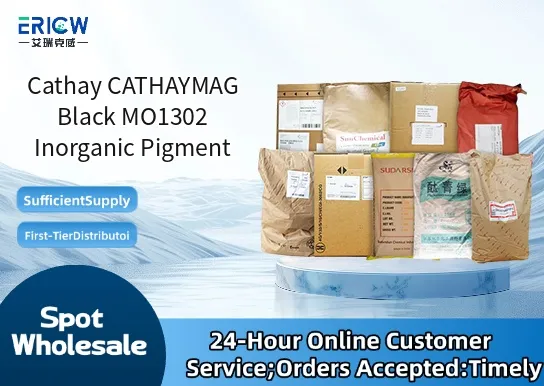
High thermal stability suitable for processing temperatures up to 800 °C.
Excellent chemical resistance against acids, alkalis, and solvents.
Non-toxic, heavy-metal-free formulation compliant with global environmental regulations including REACH and RoHS.
Consistent particle size distribution ensuring uniform dispersion and color strength.
Low oil absorption enabling high pigment loading in demanding binder systems.
Ceramic glazes and underglaze decorations for tableware and architectural tiles.
High-performance refractory coatings for kiln furniture and furnace linings.
Coloration of engineering plastics requiring thermal and UV stability.
Pigmentation of specialty glass formulations including borosilicate and soda-lime glass.
Functional fillers in conductive and antistatic ceramic composites.
| Chemical Type | Mixed metal oxide (Fe–Cr–Ni spinel-based) |
| Product Form | Fine free-flowing powder |
| Appearance | Jet-black granular powder |
| Primary Applications | Ceramics, refractories, specialty glass, high-temp plastics |
| Key Features | Thermal stability, chemical inertness, non-volatility, lightfastness |
| Benefits | No blooming, no migration, minimal sintering shrinkage, batch-to-batch consistency |
| Storage Conditions | Keep in dry, cool, well-ventilated area; protect from moisture |
Q1: What is the primary chemical composition of CATHAYMAG Black MO1302?
A: CATHAYMAG Black MO1302 is a high-performance inorganic black pigment based on a mixed-metal oxide system, engineered for thermal and chemical stability. Its exact composition is proprietary, but it contains no heavy metals such as lead, cadmium, or mercury, and complies with global regulatory expectations for restricted substances in industrial pigments.
Q2: Is MO1302 suitable for use in polyolefin compounds like PP and PE?
A: Yes — MO1302 is specifically formulated for excellent dispersion and thermal stability in polyolefins. It demonstrates minimal plate-out during extrusion and maintains consistent blackness and color strength even at processing temperatures up to 280°C, making it well-suited for injection molding, blow molding, and fiber applications.
Q3: How does MO1302 compare to carbon black in terms of UV resistance and weathering performance?
A: Unlike organic blacks or conventional carbon black, MO1302 offers superior inherent UV stability and resistance to chalking or fading under prolonged outdoor exposure. Its inorganic nature eliminates photodegradation pathways common in carbon-based systems, resulting in longer-lasting color integrity in demanding exterior applications.
Q4: Can MO1302 be used in food-contact plastics?
A: While MO1302 is manufactured without intentionally added restricted substances and meets general industrial safety benchmarks, it is not pre-qualified for direct food-contact applications under FDA 21 CFR or EU Framework Regulation (EC) No 1935/2004. Customers intending food-contact use must conduct full regulatory validation within their specific formulation and processing conditions.
Q5: What is the recommended method for dispersing MO1302 in polymer masterbatches?
A: For optimal dispersion, MO1302 should be incorporated using high-shear compounding — such as twin-screw extrusion — with appropriate carrier resin and wetting agents. Pre-blending with a low-viscosity carrier or using surface-treated grades (where available) can further enhance distribution and reduce agglomeration in final products.
Contact With Us:
E-mail: wangxingqiang@ericwchem.com
Have a Questions? Call Us:
Add:
Building A1, Jiete Industrial Park, Huangpu District, Guangzhou City, Guangdong Province, China