English
 Español
 tiếng việt
 русский
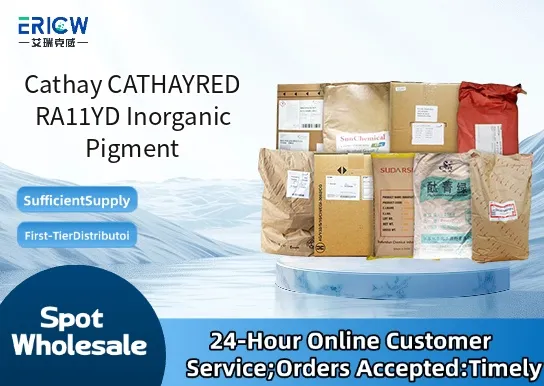
High thermal stability up to 800 °C, suitable for high-temperature processing environments.
Excellent lightfastness and weather resistance, maintaining color integrity under prolonged UV exposure.
Low water solubility and superior chemical inertness in acidic and alkaline media.
Consistent particle size distribution ensuring uniform dispersion and optimal tinting strength.
Non-toxic formulation compliant with major global regulatory frameworks including EN 71-3 and RoHS.
Ceramic glazes and frits for architectural tiles and tableware.
High-performance coatings for industrial equipment and automotive refinish systems.
Coloration of refractory materials including firebricks and kiln furniture.
Pigmentation of glass enamels and vitreous coatings.
Functional fillers in flame-retardant polymer composites requiring heat-resistant red hues.
| Chemical Type | Mixed-metal oxide (Fe–Cr–Al spinel-based) |
| Product Form | Fine dry powder |
| Appearance | Brilliant reddish-brown powder |
| Primary Applications | Ceramics, refractories, high-temp coatings, glass enamels |
| Key Features | Thermal stability, UV resistance, pH neutrality, low heavy metal content |
| Benefits | Color consistency at elevated temperatures, minimal batch-to-batch variation, easy dispersion |
| Density (g/cm³) | 4.2–4.5 |
| Particle Size (D50, µm) | 1.8–2.4 |
Q1: What is the primary chemical composition and classification of CATHAYRED RA11YD?
A: CATHAYRED RA11YD is an inorganic iron oxide-based red pigment, classified as a synthetic hematite-type pigment. It consists predominantly of α-Fe₂O₃ with minor controlled additives to optimize dispersion and thermal stability.
Q2: Is CATHAYRED RA11YD suitable for high-temperature applications such as engineering plastics or ceramic glazes?
A: Yes — it exhibits excellent thermal stability and retains color integrity up to approximately 900°C in oxidizing atmospheres, making it well-suited for high-heat processing environments including polyamide, polypropylene compounding, and ceramic decoration.
Q3: How does RA11YD perform in terms of UV resistance and weathering stability?
A: As a fully inorganic oxide pigment, RA11YD offers outstanding UV resistance and long-term outdoor durability. It shows negligible fading or chalking under prolonged exposure to sunlight and atmospheric conditions, especially when incorporated into properly formulated coatings or exterior-grade plastics.
Q4: Can RA11YD be used in food-contact or pharmaceutical packaging applications?
A: RA11YD is manufactured under strict quality control and complies with general food-contact safety principles for inorganic pigments. However, final regulatory approval depends on the specific formulation, end-use application, and regional compliance requirements — users must conduct full migration and toxicological assessments per applicable local regulations.
Q5: What is the recommended approach for dispersing RA11YD in polymer or coating systems?
A: Optimal dispersion is achieved using high-shear mixing during compounding or milling. Pre-treatment with compatible dispersants or surface modifiers may enhance wetting and reduce agglomeration, particularly in low-polarity resins. Typical dosage ranges from 0.1% to 2% by weight, depending on desired opacity and shade intensity.
Contact With Us:
E-mail: wangxingqiang@ericwchem.com
Have a Questions? Call Us:
Add:
Building A1, Jiete Industrial Park, Huangpu District, Guangzhou City, Guangdong Province, China