English
 Español
 tiếng việt
 русский
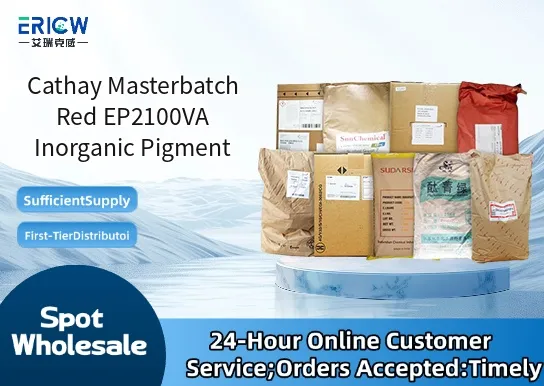
High thermal stability up to 300°C, suitable for high-temperature polymer processing.
Excellent lightfastness and weather resistance, maintaining color integrity under UV exposure.
Low migration and bleed resistance, ensuring color consistency in multi-layer and food-contact applications.
Optimized dispersion performance in polyolefins, PVC, and engineering thermoplastics.
Heavy-metal-free formulation compliant with global regulatory standards including REACH and RoHS.
Automotive interior components (dashboards, trim, seat fabrics).
Food packaging films and containers requiring FDA-compliant pigments.
Household appliances housings and decorative panels.
Construction profiles and window frames exposed to outdoor conditions.
Medical device casings where biocompatibility and sterilization stability are critical.
| Chemical Type | Inorganic iron oxide-based pigment |
| Product Form | Granular masterbatch (carrier: LDPE) |
| Appearance | Free-flowing red granules |
| Primary Applications | Polyolefins, PVC, ABS, and PS |
| Key Features | Thermal stability, UV resistance, low extractables |
| Benefits | Consistent coloration, minimal equipment fouling, regulatory compliance |
| Recommended Loading Range | 1–5 wt% depending on substrate and shade depth |
| Storage Conditions | Store in dry, cool, ventilated area; avoid direct sunlight |
Q1: What is the primary chemical composition of the red pigment in EP2100VA?
A: EP2100VA is based on a high-performance inorganic iron oxide–derived red pigment system, engineered for thermal stability and chemical inertness. It does not contain cadmium, lead, or other heavy metals restricted under major global regulatory frameworks.
Q2: Is EP2100VA suitable for food-contact plastic applications?
A: Yes — EP2100VA is formulated to meet general requirements for food-contact compliance in polyolefins and engineering thermoplastics. Final regulatory acceptance depends on the complete formulation, processing conditions, and target market regulations; users should conduct full migration and extractables testing as part of their due diligence.
Q3: How does EP2100VA perform during high-temperature processing, such as injection molding of PP or PA6?
A: The pigment system exhibits excellent thermal stability up to 280 °C, making it well-suited for demanding processes including injection molding and extrusion of polypropylene, polyamide, and other engineering resins. Minimal color shift or degradation is observed under standard industrial processing windows.
Q4: What carrier resin is used in this masterbatch, and can it be customized?
A: EP2100VA is supplied on a polyethylene-based carrier optimized for broad compatibility with polyolefin systems. Custom carrier options — including PP, EVA, or PS — are available upon request to improve dispersion and performance in specific polymer matrices.
Q5: What is the typical dosage range for achieving full opacity and consistent shade in polyolefin applications?
A: Dosage is formulation-dependent, but EP2100VA is typically used at low concentrations — generally ranging from 0.1% to 2% by weight — to achieve strong chroma and opacity. Optimal loading should be determined through small-scale trials considering base resin, desired shade intensity, and processing method.
Contact With Us:
E-mail: wangxingqiang@ericwchem.com
Have a Questions? Call Us:
Add:
Building A1, Jiete Industrial Park, Huangpu District, Guangzhou City, Guangdong Province, China