English
 Español
 tiếng việt
 русский
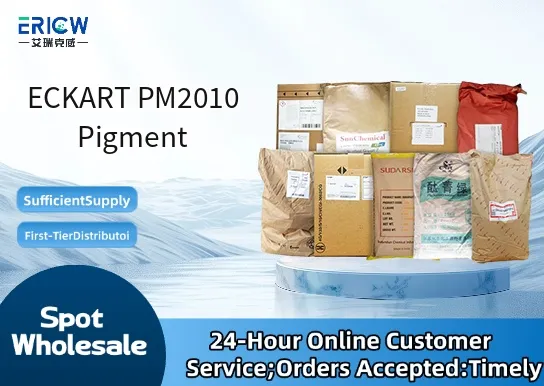
Highly reflective aluminum flake pigment with controlled particle size distribution for consistent optical performance.
Optimized surface treatment for excellent dispersion stability in solvent-based and high-solids coating systems.
Superior weather resistance and UV stability, maintaining metallic brilliance under prolonged outdoor exposure.
Low oil absorption enabling high loading capacity without compromising viscosity or application properties.
ISO 9001–certified manufacturing process ensuring batch-to-batch reproducibility and stringent quality control.
Automotive OEM and refinish coatings requiring durable metallic effect and color consistency.
Industrial maintenance paints for infrastructure, machinery, and metal fabrication.
Plastic masterbatches for injection-molded and extruded decorative components.
Architectural coatings including façade paints and coil coatings for aluminum composite panels.
Printing inks for high-end metallic packaging and security applications.
| Chemical Type | Surface-treated aluminum pigment |
| Product Form | Free-flowing dry powder |
| Appearance | Greyish-silver metallic powder |
| Primary Applications | Coatings, inks, and plastics |
| Key Features | High reflectivity, good orientation, low dusting |
| Benefits | Enhanced metallic effect, improved storage stability, easy wetting |
| Recommended Dispersants | Polymeric dispersants (e.g., acrylic or polyester-based) |
| Storage Conditions | Store in original sealed container at 5–30 °C, protect from moisture and direct sunlight |
Q1: What is the primary function of ECKART PM2010 Pigment in coating and ink systems?
A: ECKART PM2010 is a high-performance pearlescent pigment based on mica coated with titanium dioxide, designed to deliver strong chroma, excellent lightfastness, and a smooth, metallic luster in decorative and functional coatings, inks, and plastics.
Q2: Is ECKART PM2010 suitable for use in water-based systems?
A: Yes, PM2010 is surface-treated to ensure good dispersibility and stability in both water-based and solvent-based formulations, though optimal performance requires proper dispersion techniques and compatible rheology modifiers.
Q3: How does PM2010 compare to conventional aluminum pigments in terms of weather resistance?
A: Unlike unprotected aluminum pigments, PM2010’s inorganic mica-titania structure provides inherently superior UV stability and corrosion resistance, making it well-suited for exterior applications without requiring additional protective binders.
Q4: What are key handling considerations during formulation and processing?
A: To preserve particle integrity and optical effect, avoid high-shear mixing beyond necessity, minimize prolonged grinding, and use non-ionic or weakly anionic dispersants—strongly acidic or alkaline conditions should be avoided to prevent surface degradation.
Q5: Can PM2010 be used in food-contact compliant coatings?
A: PM2010 is manufactured from FDA- and EFSA-permitted raw materials, and its composition meets general requirements for indirect food contact when incorporated into fully cured, compliant resin systems—final regulatory approval depends on the complete formulation and end-use application.
Contact With Us:
E-mail: wangxingqiang@ericwchem.com
Have a Questions? Call Us:
Add:
Building A1, Jiete Industrial Park, Huangpu District, Guangzhou City, Guangdong Province, China