English
 Español
 tiếng việt
 русский
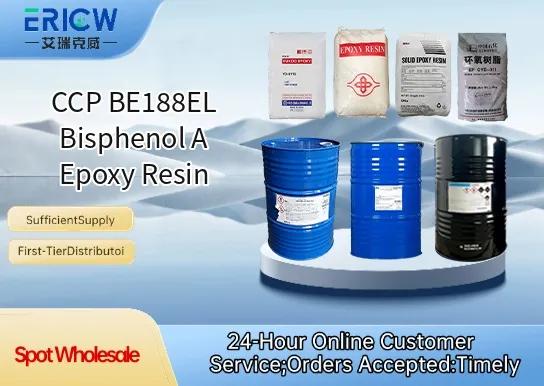
High purity bisphenol A-based epoxy resin with consistent molecular weight distribution.
Excellent thermal stability and long-term storage stability under ambient conditions.
Low chloride content (< 500 ppm), ensuring superior electrical insulation properties.
Optimized viscosity (10,000–14,000 cP at 25°C) for efficient processing in casting and laminating applications.
Reactive epoxide functionality enabling strong crosslinking with standard amine or anhydride hardeners.
Electrical encapsulation of transformers, reactors, and high-voltage insulators.
Laminating resin for flame-retardant FR-4 printed circuit board (PCB) substrates.
Structural adhesives requiring high bond strength and environmental resistance.
Wind turbine blade bonding and composite matrix resin in aerospace-grade prepregs.
Protective coatings for corrosion-resistant industrial flooring and chemical tank linings.
| Chemical Type | Bisphenol A diglycidyl ether (DGEBA) epoxy resin |
| Product Form | Clear to pale yellow viscous liquid |
| Appearance | Homogeneous, transparent, free from gels or suspended particles |
| Epoxy Equivalent Weight (EEW) | 185–192 g/eq |
| Viscosity (25°C) | 10,000–14,000 mPa·s (cP) |
| Chloride Content | ≤ 500 ppm |
| Volatile Content | ≤ 0.3 wt% |
| Softening Point | 12–16°C |
Q1: What is the primary application of CCP BE188EL in coating systems?
A: CCP BE188EL is widely used as a reactive diluent and viscosity modifier in high-performance epoxy coatings, particularly for industrial maintenance, marine, and protective linings where enhanced flexibility, adhesion, and chemical resistance are required.
Q2: How does CCP BE188EL differ from standard liquid Bisphenol A epoxy resins like DGEBA?
A: CCP BE188EL is a modified Bisphenol A epoxy resin with reduced molecular weight and tailored functionality, offering lower initial viscosity and improved compatibility with amine hardeners—enabling higher solids formulations without excessive solvent use.
Q3: Is CCP BE188EL suitable for food-contact compliant epoxy systems?
A: CCP BE188EL is not inherently food-contact approved; its suitability for such applications depends on full formulation validation—including hardener selection, cure conditions, and final system testing—against relevant regulatory frameworks.
Q4: What storage conditions are recommended to maintain product stability?
A: Store in tightly sealed containers at temperatures between 10–30°C, away from direct sunlight and moisture. Prolonged exposure to elevated temperatures or humidity may affect viscosity and reactivity over time.
Q5: Can CCP BE188EL be blended with other epoxy resins or reactive diluents?
A: Yes—CCP BE188EL demonstrates good miscibility with common solid and liquid epoxy resins, as well as aliphatic and aromatic glycidyl ether diluents, supporting formulation flexibility for viscosity adjustment and performance tuning.
Contact With Us:
E-mail: wangxingqiang@ericwchem.com
Have a Questions? Call Us:
Add:
Building A1, Jiete Industrial Park, Huangpu District, Guangzhou City, Guangdong Province, China