English
 Español
 tiếng việt
 русский
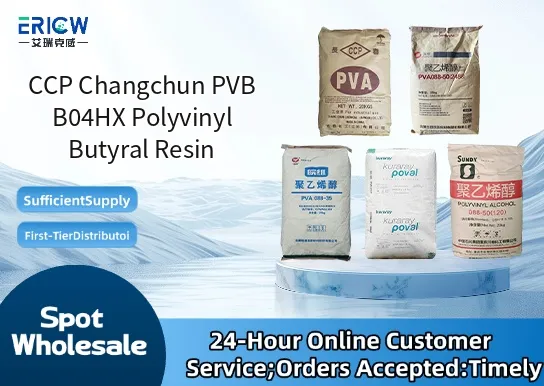
High adhesion strength to glass and various substrates, ensuring reliable interlayer bonding in laminated safety glass.
Excellent optical clarity and low haze, meeting stringent requirements for automotive and architectural glazing.
Superior thermal stability and processability in extrusion and calendering operations.
Consistent batch-to-batch quality with tightly controlled butyral content and viscosity profile.
Low volatile organic compound (VOC) emission, supporting sustainable manufacturing and indoor air quality compliance.
Automotive laminated windshields and side windows.
Architectural safety glass for facades, skylights, and overhead glazing.
Photovoltaic module encapsulation layers for enhanced durability and moisture resistance.
Security glazing systems requiring bullet-resistant or blast-resistant performance.
Acoustic laminated glass for noise reduction in transportation and building applications.
| Chemical Type | Polyvinyl butyral (PVB) resin |
| Product Form | Free-flowing white granules |
| Appearance | Off-white to light yellow granular solid |
| Butyral Content | 65–69 wt% |
| Hydroxyl Content | 18–22 wt% |
| Residual Vinyl Alcohol Content | ≤ 1.5 wt% |
| Viscosity (4% w/v in ethanol/toluene 3:1, 20°C) | 4.0–4.6 dL/g |
| Moisture Content | ≤ 0.5 wt% |
Q1: What are the key performance advantages of CCP Changchun PVB B04HX compared to standard PVB resins?
A: CCP Changchun PVB B04HX offers enhanced compatibility with polar polymers and improved film-forming characteristics, particularly in demanding adhesive and coating applications. Its optimized molecular weight distribution supports excellent clarity, flexibility, and adhesion to glass and metal substrates without excessive tackiness during processing.
Q2: Is PVB B04HX suitable for use in laminated safety glass interlayers?
A: While PVB B04HX shares the fundamental chemistry of interlayer-grade PVB resins, it is primarily formulated for industrial coatings, inks, and adhesive systems—not structural safety glass interlayers. For automotive or architectural laminated glass, dedicated high-purity, high-viscosity interlayer grades with certified optical and mechanical performance are recommended.
Q3: How should PVB B04HX be dissolved and handled in solvent-based formulations?
A: PVB B04HX dissolves readily in common oxygenated solvents such as ethanol, isopropanol, ethyl acetate, and ketones like methyl ethyl ketone (MEK). For optimal dissolution, gradual addition under moderate agitation and controlled temperature (typically below 40 °C) is advised to avoid gelation or viscosity spikes. Pre-dispersion in a portion of solvent prior to full dilution improves homogeneity.
Q4: Can PVB B04HX be used in water-based systems?
A: PVB B04HX is inherently hydrophobic and not directly dispersible in water. However, it can be incorporated into aqueous systems via emulsification using appropriate surfactants or by formulating as a hybrid dispersion with co-binders that provide colloidal stability. Performance in such systems depends heavily on formulation design and requires empirical optimization.
Contact With Us:
E-mail: wangxingqiang@ericwchem.com
Have a Questions? Call Us:
Add:
Building A1, Jiete Industrial Park, Huangpu District, Guangzhou City, Guangdong Province, China