English
 Español
 tiếng việt
 русский
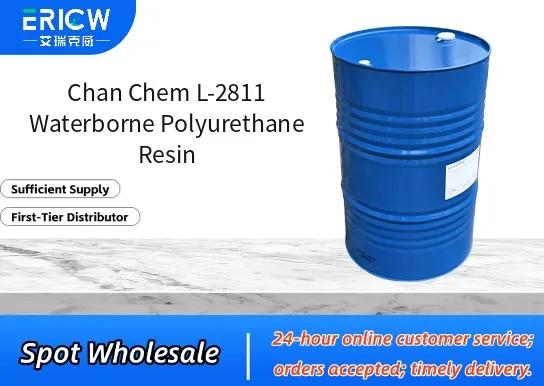
Excellent film-forming capability with high gloss and clarity after drying.
Superior flexibility and abrasion resistance for demanding coating applications.
Low VOC content, compliant with stringent environmental regulations including EU REACH and US EPA guidelines.
Good compatibility with acrylic emulsions and common water-based additives.
Stable dispersion in water with excellent storage stability (≥6 months at 5–35°C).
Water-based leather finishing topcoats and protective layers.
High-performance wood coatings for furniture and flooring.
Flexible packaging inks requiring solvent-free formulation.
Textile coatings for functional finishes (e.g., waterproof breathable membranes).
Industrial maintenance coatings for metal and plastic substrates.
| Chemical Type | Aliphatic waterborne polyurethane dispersion |
| Product Form | Opaque white to light yellow liquid |
| Appearance | Homogeneous aqueous dispersion |
| Solids Content | 28–32 wt% (by ASTM D2196) |
| pH Value | 7.5–8.5 (at 25°C) |
| Viscosity (Brookfield RVT, #2 spindle, 20 rpm) | 150–400 mPa·s |
| Particle Size (D50) | ≈80–120 nm (by dynamic light scattering) |
| Minimum Film Formation Temperature (MFFT) | ≤25°C |
Q1: What are the primary application areas for Chan Chem L-2811?
A: Chan Chem L-2811 is widely used in high-performance waterborne coatings for flexible substrates, including synthetic leather finishing, textile coatings, and soft-touch industrial coatings where excellent film flexibility, abrasion resistance, and low-temperature film formation are required.
Q2: How does L-2811 compare to solvent-based polyurethane resins in terms of performance?
A: L-2811 delivers comparable mechanical properties—such as tensile strength, elongation, and adhesion—to many conventional solvent-based systems, while offering significantly reduced VOC content and improved workplace safety. Its film integrity and chemical resistance remain robust after full coalescence and curing.
Q3: Can L-2811 be blended with other waterborne polymers or additives?
A: Yes, L-2811 demonstrates good compatibility with common waterborne acrylics, styrene-acrylic dispersions, and crosslinkers such as aziridine or carbodiimide types. Compatibility should always be verified through small-scale formulation trials and stability testing under intended storage and processing conditions.
Q4: What is the recommended pH range for formulating with L-2811?
A: For optimal stability and performance, L-2811 should be formulated within a pH range of approximately 7.5 to 9.0. Strongly acidic or alkaline conditions may affect dispersion stability or interfere with crosslinking reactions.
Q5: Does L-2811 require post-crosslinking for optimal film properties?
A: While L-2811 forms functional films on its own, incorporating a suitable water-dispersible crosslinker typically enhances chemical resistance, heat resistance, and mechanical durability—especially in demanding end-use applications. The need for crosslinking depends on the specific performance requirements of the final coating system.
Contact With Us:
E-mail: wangxingqiang@ericwchem.com
Have a Questions? Call Us:
Add:
Building A1, Jiete Industrial Park, Huangpu District, Guangzhou City, Guangdong Province, China