English
 Español
 tiếng việt
 русский
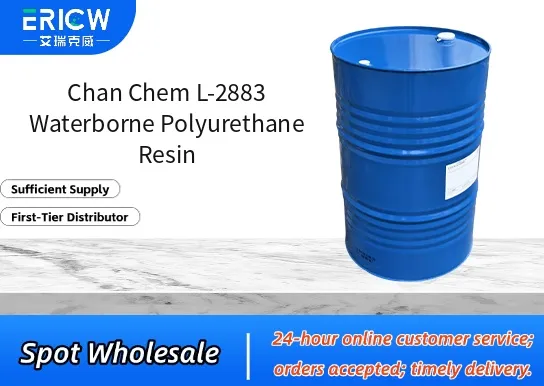
Low-VOC, environmentally compliant formulation meeting global regulatory standards for waterborne coatings.
Excellent film-forming capability with high gloss retention and superior clarity after drying.
Outstanding flexibility and abrasion resistance, ideal for demanding mechanical performance requirements.
Good compatibility with acrylic emulsions and common waterborne crosslinkers for hybrid system design.
Stable storage at ambient temperature (5–40 °C) with shelf life of 12 months in unopened original packaging.
Waterborne wood coatings for furniture, flooring, and cabinetry.
Flexible packaging inks requiring high adhesion to PET, BOPP, and metallized films.
Leather finishing topcoats for footwear, upholstery, and automotive interiors.
Industrial maintenance coatings for metal substrates in low-emission environments.
Textile coating binders for functional finishes including waterproofing and soft hand feel.
| Chemical Type | Anionic aliphatic polyurethane dispersion |
| Product Form | Opaque white liquid |
| Appearance | Homogeneous milky dispersion, no sedimentation |
| Solids Content | 30.0 ± 1.0 wt% |
| pH Value | 7.8 – 8.5 |
| Viscosity (25 °C, Brookfield RVT, #3 spindle, 12 rpm) | 300 – 800 mPa·s |
| Particle Size (D50) | ≈ 80 – 120 nm |
| Minimum Film Formation Temperature (MFFT) | ≤ 15 °C |
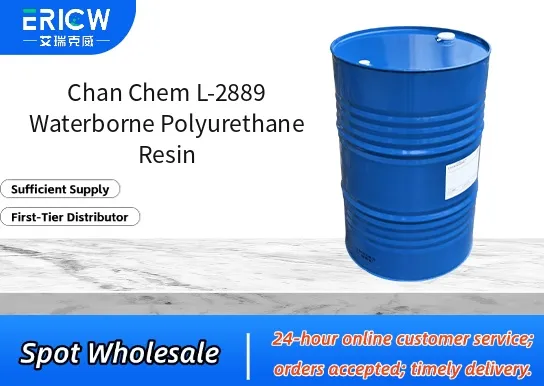
Q1: What are the primary application areas for Chan Chem L-2883?
A: Chan Chem L-2883 is widely used in water-based wood coatings, leather finishing systems, and flexible packaging laminating adhesives where low VOC content, good film clarity, and balanced hardness-flexibility are required.
Q2: How does L-2883 perform in terms of water resistance and chemical resistance after film formation?
A: Once fully cured, films formed from L-2883 exhibit good resistance to water spotting and mild aqueous solutions. Resistance to solvents and strong acids/bases depends on crosslinking density and post-cure conditions—formulators often enhance performance with compatible crosslinkers or thermal treatment.
Q3: Can L-2883 be blended with other waterborne resins, such as acrylics or polyvinyl acetate (PVAc)?
A: Yes, L-2883 demonstrates good compatibility with many common waterborne acrylic dispersions and PVAc emulsions, enabling hybrid formulations that balance cost, flexibility, and durability. Compatibility testing under actual formulation conditions—including pH, ionic strength, and shear—is recommended before scale-up.
Q4: What is the typical shelf life and recommended storage conditions?
A: When stored unopened in a cool, dry place away from direct sunlight and freezing temperatures, L-2883 maintains stability for up to 12 months. Avoid prolonged exposure to high humidity or temperature fluctuations during storage.
Contact With Us:
E-mail: wangxingqiang@ericwchem.com
Have a Questions? Call Us:
Add:
Building A1, Jiete Industrial Park, Huangpu District, Guangzhou City, Guangdong Province, China