English
 Español
 tiếng việt
 русский
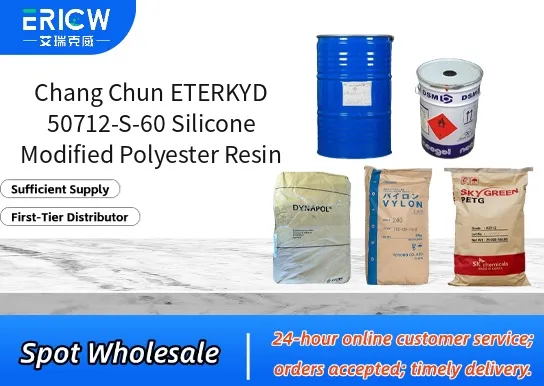
Enhanced thermal stability due to silicone modification, enabling sustained performance at elevated temperatures.
Improved weather resistance and UV durability compared to conventional polyester resins.
Excellent compatibility with amino crosslinkers for high-gloss, durable thermoset coatings.
Good flow and leveling characteristics for smooth film formation in coil and appliance coating applications.
Reduced surface tension leading to superior substrate wetting and intercoat adhesion.
Pre-painted metal (coil coating) for architectural and industrial panels.
Appliance enamel coatings for refrigerators, washing machines, and ovens.
High-durability exterior metal façade systems and cladding finishes.
Heat-resistant topcoats for HVAC components and cooking appliances.
Functional coatings requiring combined corrosion protection and aesthetic performance.
| Chemical Type | Silicone-modified polyester resin |
| Product Form | Clear to pale yellow viscous liquid |
| Appearance | Homogeneous, transparent to slightly hazy solution |
| Solvent System | Aromatic hydrocarbon-based (e.g., xylene, Solvesso™ 100) |
| Solid Content (wt%) | 60 ± 2% |
| Acid Value (mg KOH/g) | 12–16 |
| Viscosity (mPa·s, 25°C) | 4,000–6,000 |
| Key Features | Thermal stability, weather resistance, crosslinking efficiency with melamine formaldehyde |
Q1: What is the primary functional benefit of silicone modification in this polyester resin?
A: The silicone modification enhances thermal stability, improves surface slip and mar resistance, and contributes to better substrate wetting—particularly on challenging or low-energy surfaces—without compromising the core mechanical and weathering performance of the base polyester system.
Q2: Is ETERKYD 50712-S-60 suitable for coil coating applications?
A: Yes, it is specifically formulated for high-performance coil coating systems where excellent flexibility, long-term gloss retention, and resistance to chalking and UV degradation are required—especially in demanding architectural and industrial metal finishing applications.
Q3: How does this resin perform in combination with conventional crosslinkers such as TGIC or HAA?
A: It exhibits good compatibility and reactivity with standard amino and hydroxyalkylamide (HAA) crosslinkers, delivering balanced cure response and film properties. Compatibility with TGIC-based systems is also well established, though formulation optimization is recommended to ensure full cure and optimal mechanical balance.
Q4: Can this resin be used in solvent-borne and powder coating systems interchangeably?
A: It is primarily designed for solvent-borne and high-solids liquid coatings, but has also been successfully adapted into select powder formulations where its silicone-modified architecture supports improved flow and reduced surface defects—subject to appropriate particle size control and curing profile adjustment.
Contact With Us:
E-mail: wangxingqiang@ericwchem.com
Have a Questions? Call Us:
Add:
Building A1, Jiete Industrial Park, Huangpu District, Guangzhou City, Guangdong Province, China