English
 Español
 tiếng việt
 русский
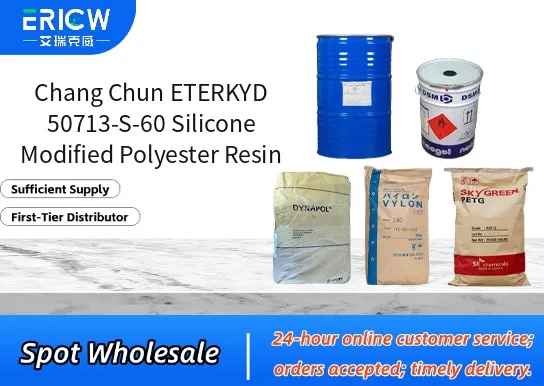
Enhanced weather resistance due to silicone modification, offering superior UV stability and reduced chalking.
Excellent gloss retention and color stability after prolonged outdoor exposure.
Good compatibility with standard polyester and acrylic crosslinkers for flexible formulation design.
Improved flexibility and impact resistance compared to conventional polyester resins.
Low viscosity enables easy handling and high-solids coating formulations without excessive solvent demand.
High-performance coil coatings for architectural and industrial metal substrates.
Prefinished building panels requiring long-term durability and aesthetic consistency.
Exterior metal roofing and wall cladding systems exposed to harsh climatic conditions.
Automotive trim and non-critical exterior components demanding OEM-level finish quality.
General-purpose premium decorative and protective coatings for aluminum and galvanized steel.
| Chemical Type | Silicone-modified polyester resin |
| Product Form | Liquid, solution in aromatic hydrocarbons |
| Appearance | Clear to slightly hazy amber liquid |
| Non-Volatile Content (wt%) | 60 ± 2% |
| Viscosity (mPa·s, 25°C) | 4,000 – 6,000 |
| Acid Value (mg KOH/g) | 18 – 22 |
| Hydroxyl Value (mg KOH/g) | 110 – 125 |
| Specific Gravity (25°C) | 1.02 – 1.05 |
Q1: What are the primary benefits of silicone modification in this polyester resin?
A: The silicone modification enhances thermal stability, improves surface hydrophobicity and release properties, and contributes to better weather resistance and gloss retention—particularly valuable in coil coating and high-performance industrial finishes.
Q2: Is ETERKYD 50713-S-60 suitable for ambient-cure or low-bake applications?
A: This resin is formulated for thermosetting systems and typically requires elevated temperature curing (e.g., 180–220 °C), making it well-suited for continuous coil coating lines and oven-cured metal finishing—not for true ambient-cure formulations.
Q3: How does this resin perform in terms of compatibility with common crosslinkers?
A: ETERKYD 50713-S-60 demonstrates good compatibility with melamine-formaldehyde resins and isothiocyanate-based crosslinkers; formulation adjustments may be needed when blending with highly reactive or sterically hindered hardeners.
Q4: Can it be used in high-gloss topcoats for architectural metal panels?
A: Yes—its balanced molecular structure and silicone-enhanced flow characteristics support excellent leveling and gloss development, making it a preferred choice for premium-quality, durable architectural and appliance coatings.
Contact With Us:
E-mail: wangxingqiang@ericwchem.com
Have a Questions? Call Us:
Add:
Building A1, Jiete Industrial Park, Huangpu District, Guangzhou City, Guangdong Province, China