English
 Español
 tiếng việt
 русский
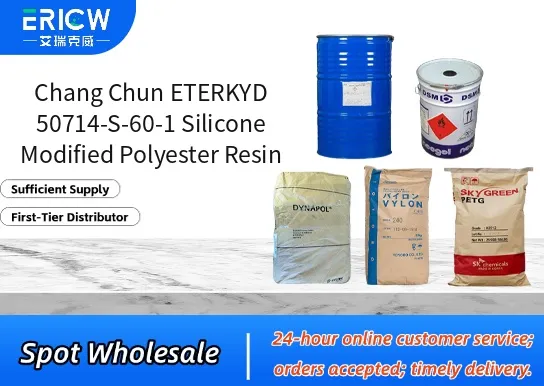
Enhanced thermal stability and long-term weather resistance due to silicone modification.
Excellent gloss retention and color stability under UV exposure and outdoor conditions.
Good compatibility with standard polyester and acrylic resins for hybrid coating formulations.
Improved flexibility and impact resistance compared to conventional polyester resins.
Low volatile organic compound (VOC) content, supporting compliant high-solids coating systems.
Exterior architectural coatings for metal cladding and façade systems.
High-durability coil coatings for pre-painted steel and aluminum substrates.
Industrial maintenance coatings requiring extended service life in harsh environments.
Automotive trim and non-critical exterior plastic/metal parts coatings.
General-purpose premium decorative and protective topcoats for metal furniture and fixtures.
| Chemical Type | Silicone-modified polyester resin |
| Product Form | Liquid, solvent-based |
| Appearance | Clear to pale yellow viscous liquid |
| Primary Applications | High-performance coil and architectural coatings |
| Key Features | UV resistance, thermal stability, gloss retention |
| Recommended Solvents | Aromatic hydrocarbons, esters, ketones |
| Storage Conditions | Store in cool, dry, well-ventilated area; avoid direct sunlight |
| Shelf Life | 12 months from date of manufacture under proper storage |
Q1: What is the primary functional benefit of silicone modification in this polyester resin?
A: The silicone modification enhances thermal stability, improves surface slip and mar resistance, and contributes to better weatherability and gloss retention—particularly valuable in high-performance coil coating and exterior architectural finishes.
Q2: Is ETERKYD 50714-S-60-1 compatible with standard polyester crosslinkers such as TGIC or HAA systems?
A: Yes, it is formulated for compatibility with common amino- and hydroxyl-reactive crosslinkers including TGIC, β-hydroxyalkylamide (HAA), and melamine-based curing agents—enabling flexible formulation design for both coil and general industrial coatings.
Q3: How does this resin perform in terms of film flexibility and impact resistance after curing?
A: It delivers excellent balance between hardness and flexibility, supporting good reverse impact resistance and bend performance—making it suitable for applications requiring substrate conformity, such as pre-painted metal forming operations.
Q4: Can this resin be used in low-bake or ambient-cure formulations?
A: While optimized for conventional cure profiles (e.g., 200–220 °C for 20–30 seconds in coil lines), it can be adapted to lower-temperature baking with appropriate catalyst selection and crosslinker adjustment—though full performance attributes may require validation under specific conditions.
Contact With Us:
E-mail: wangxingqiang@ericwchem.com
Have a Questions? Call Us:
Add:
Building A1, Jiete Industrial Park, Huangpu District, Guangzhou City, Guangdong Province, China