English
 Español
 tiếng việt
 русский
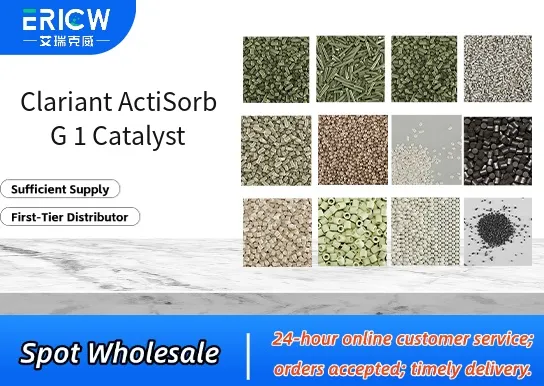
Highly selective palladium-based heterogeneous catalyst for controlled hydrogenation reactions.
Engineered with optimized metal dispersion and thermal stability for consistent batch-to-batch performance.
Low leaching profile ensures minimal metal contamination in sensitive pharmaceutical and fine chemical intermediates.
Designed for easy handling and filtration—reduces processing time and downstream purification burden.
Compliant with ICH Q5D and Q7 guidelines for catalyst use in regulated API manufacturing.
Hydrogenation of nitroarenes to aromatic amines in pharmaceutical active ingredient synthesis.
Selective reduction of alkenes and alkynes under mild conditions in fine chemical manufacturing.
Catalytic deprotection of benzyl and Cbz groups in peptide and oligonucleotide chemistry.
Continuous-flow hydrogenation processes requiring robust, fixed-bed compatible catalysts.
| Chemical Type | Palladium on high-surface-area carbon support |
| Product Form | Free-flowing black granular solid |
| Appearance | Uniform dark grey to black granules, 0.5–2.0 mm diameter |
| Pd Content (wt%) | 5.0 ± 0.3% |
| Surface Area (BET) | ≥ 800 m²/g |
| Moisture Content | ≤ 1.0% (w/w) |
| Ignition Loss (550 °C) | ≤ 15% |
| Primary Applications | Pharmaceutical intermediates, agrochemicals, specialty polymers |
Q1: What is the primary function of ActiSorb G 1 in polymer processing?
A: ActiSorb G 1 is a solid-phase catalyst designed to promote controlled dehydrochlorination and stabilization of polyvinyl chloride (PVC) and related chlorinated polymers during high-temperature compounding and extrusion. It helps suppress discoloration and degradation by neutralizing acidic impurities and scavenging labile chlorine.
Q2: How does ActiSorb G 1 differ from conventional liquid or metal-based PVC stabilizers?
A: Unlike traditional metal soaps or organotin compounds, ActiSorb G 1 is a non-metallic, halogen-free, solid catalyst with low volatility and minimal impact on final product odor or extractables. Its heterogeneous nature provides gradual, sustained activity and improved compatibility with sensitive polymer blends and food-contact–grade formulations.
Q3: Is ActiSorb G 1 suitable for use in food-contact or medical-grade PVC applications?
A: ActiSorb G 1 is formulated to meet stringent purity requirements and has been evaluated for suitability in regulated applications. While final compliance depends on full system validation and regulatory review, it is commonly selected for compounds targeting food-contact and medical device applications where low migration and absence of heavy metals are critical.
Q4: What is the recommended method of incorporation into PVC compound formulations?
A: ActiSorb G 1 is typically added during dry-blending or high-intensity mixing prior to extrusion. Due to its fine particulate nature, it disperses readily in PVC resin and plasticizer systems. For optimal performance, ensure uniform distribution—especially when used at low concentrations—and avoid prolonged exposure to moisture before processing.
Contact With Us:
E-mail: wangxingqiang@ericwchem.com
Have a Questions? Call Us:
Add:
Building A1, Jiete Industrial Park, Huangpu District, Guangzhou City, Guangdong Province, China