English
 Español
 tiếng việt
 русский
High thermal stability suitable for demanding high-temperature processing conditions.
Excellent lightfastness and weather resistance for long-term outdoor performance.
Good dispersibility in aqueous and solvent-based systems without requiring additional surfactants.
Low heavy metal content, compliant with major global regulatory frameworks including REACH and RoHS.
Consistent batch-to-batch color strength and hue reproducibility for reliable manufacturing.
Automotive coatings requiring high durability and gloss retention.
Industrial maintenance paints for infrastructure and machinery protection.
Plastic coloration for engineering thermoplastics such as ABS and polycarbonate.
Architectural coatings including façade paints and exterior wall finishes.
Printing inks for packaging applications demanding color consistency and migration safety.
| Chemical Type | Organic pigment (quinacridone derivative) |
| Product Form | Free-flowing powder |
| Appearance | Reddish-violet fine powder |
| Primary Applications | Coatings, plastics, inks |
| Key Features | Thermally stable, lightfast, dispersible |
| Benefits | Color consistency, regulatory compliance, low VOC impact |
| Storage Conditions | Store in cool, dry place; protect from moisture and direct sunlight |
| Shelf Life | 24 months from date of manufacture under recommended storage |
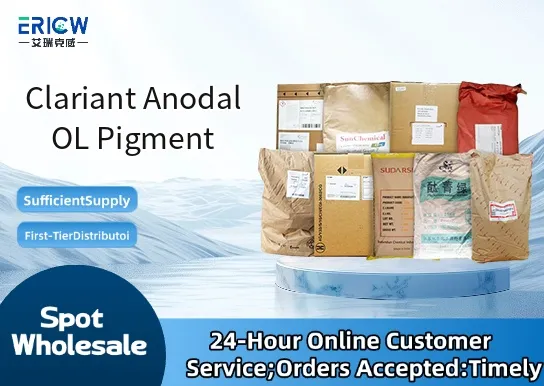
Q1: What is the primary application of Clariant Anodal OL Pigment?
A: Clariant Anodal OL Pigment is specifically engineered for use in anodized aluminum coloring applications, where it delivers stable, lightfast, and electrolytically stable coloration during the anodizing process—particularly suited for architectural, automotive, and decorative metal finishes.
Q2: Is Clariant Anodal OL Pigment compatible with standard sulfuric acid anodizing baths?
A: Yes, it is formulated to be compatible with conventional sulfuric acid-based anodizing electrolytes and performs reliably across typical operating temperatures and current densities used in industrial Type II anodizing processes.
Q3: How is dosage typically determined for optimal color development?
A: Dosage depends on formulation requirements, desired shade intensity, and bath conditions—but it is generally used at low concentrations, typically ranging from 0.1% to 2% by weight relative to the total bath volume, with fine-tuning recommended via lab-scale trials.
Q4: Does this pigment require special handling or stabilization additives in the anodizing bath?
A: Clariant Anodal OL Pigment is designed for direct addition and exhibits good bath stability under standard anodizing conditions; however, maintaining consistent pH, temperature, and agitation is recommended to ensure uniform dispersion and long-term performance.
Q5: Can it be used for achieving black or dark gray shades on anodized aluminum?
A: Yes—it is widely applied for producing rich, neutral-toned black and dark gray finishes with excellent color consistency and resistance to fading during sealing and post-treatment steps.
Contact With Us:
E-mail: wangxingqiang@ericwchem.com
Have a Questions? Call Us:
Add:
Building A1, Jiete Industrial Park, Huangpu District, Guangzhou City, Guangdong Province, China