English
 Español
 tiếng việt
 русский
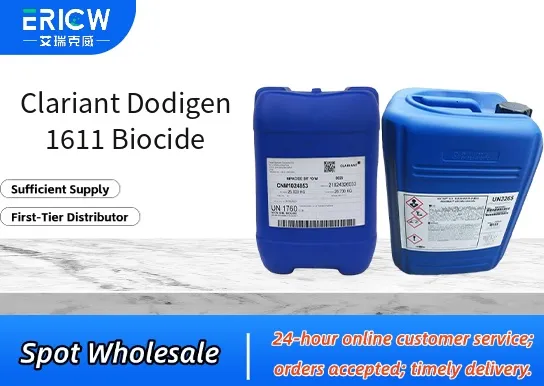
Broad-spectrum efficacy against bacteria, fungi, and algae in industrial water systems.
Stable performance across a wide pH range (pH 4–9) and tolerant to common water treatment additives.
Low foaming formulation suitable for high-shear and recirculating cooling water applications.
Compatible with common corrosion inhibitors and scale control agents without compromising biocidal activity.
Non-oxidizing mode of action helps minimize system corrosion and material degradation risks.
Cooling water systems in power generation and HVAC installations.
Process water circuits in pulp and paper manufacturing.
Recirculating water loops in chemical and petrochemical plants.
Make-up water treatment for closed-loop industrial cooling towers.
Preservation of process fluids in metalworking and coating operations.
| Chemical Type | Isothiazolinone-based non-oxidizing biocide |
| Product Form | Clear to slightly hazy aqueous solution |
| Appearance | Pale yellow liquid |
| pH (1% w/w aqueous solution) | 3.0 – 5.0 |
| Density (20 °C) | 1.08 – 1.12 g/cm³ |
| Active Ingredient Content | 1.6 ± 0.2% w/w total isothiazolinones (DIDP + BIT) |
| Solubility | Miscible with water in all proportions |
| Storage Stability | ≥ 24 months at 5–30 °C in original sealed container |
Q1: What is the primary mode of action of Dodigen 1611 Biocide?
A: Dodigen 1611 Biocide functions primarily as a broad-spectrum preservative through membrane disruption and interference with essential microbial metabolic processes, effectively controlling bacteria, yeasts, and molds in water-based industrial formulations.
Q2: In which types of industrial formulations is Dodigen 1611 commonly used?
A: It is widely applied in water-miscible metalworking fluids, industrial cleaners, pigment dispersions, latex emulsions, and other aqueous process and maintenance products where long-term microbiological stability is required.
Q3: Is Dodigen 1611 compatible with common surfactants and additives found in industrial formulations?
A: Yes, Dodigen 1611 demonstrates good compatibility with anionic, nonionic, and amphoteric surfactants, as well as typical thickeners, corrosion inhibitors, and pH buffers—though compatibility testing under actual formulation conditions is recommended prior to full-scale implementation.
Q4: How should Dodigen 1611 be dosed in a formulation?
A: Dosage depends on formulation composition, water quality, and anticipated microbial challenge; it is typically used at low concentrations, generally ranging from 0.1% to 2% by weight of the final product, with optimization guided by challenge testing and regulatory compliance requirements.
Contact With Us:
E-mail: wangxingqiang@ericwchem.com
Have a Questions? Call Us:
Add:
Building A1, Jiete Industrial Park, Huangpu District, Guangzhou City, Guangdong Province, China