English
 Español
 tiếng việt
 русский
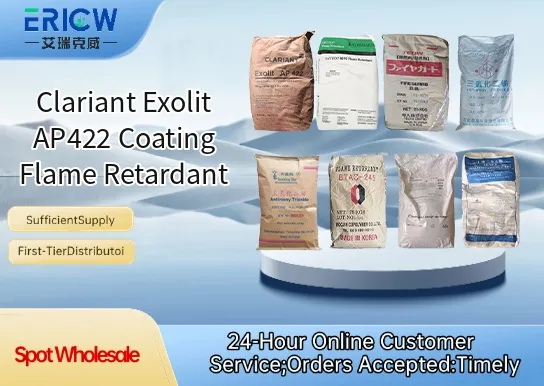
Intumescent flame retardant specifically engineered for water-based and solvent-based coating systems.
Enables excellent fire performance (e.g., UL 94 V-0, EN 13501-1 Class B-s1,d0) without halogenated chemistry.
Offers good compatibility with common binders including acrylics, polyurethanes, and alkyds.
Provides low smoke development and reduced toxic gas emission during combustion.
Maintains coating integrity and adhesion after curing, supporting long-term durability and weather resistance.
Fire-retardant architectural coatings for interior walls, ceilings, and structural steel.
Protective coatings for transportation interiors (buses, trains, aircraft cabin components).
Flame-retardant wood finishes and decorative panel coatings in commercial buildings.
Coatings for electrical enclosures and cable management systems requiring passive fire protection.
Intumescent topcoats for passive fire protection of load-bearing steel structures.
| Chemical Type | Phosphorus-nitrogen intumescent system (halogen-free) |
| Product Form | Fine white to off-white free-flowing powder |
| Appearance | Homogeneous granular powder with slight gloss |
| Primary Applications | Water-based and solvent-based intumescent and decorative fire-retardant coatings |
| Key Features | Halogen-free, low smoke, low toxicity, good dispersion stability |
| Recommended Loading Range | 15–30 wt% (relative to total solids in coating formulation) |
| Storage Conditions | Store in dry, cool conditions (<25 °C); protect from moisture and direct sunlight |
| Shelf Life | 24 months in original sealed packaging under recommended storage conditions |
Q1: What types of coating systems is Exolit AP422 designed for?
A: Exolit AP422 is specifically formulated for waterborne and solvent-borne architectural, industrial, and protective coatings—particularly where low-impact flame retardancy with good compatibility and minimal effect on film appearance is required.
Q2: How does Exolit AP422 function in a coating formulation?
A: It acts primarily through an intumescent mechanism, promoting the formation of a thermally insulating char layer upon exposure to heat or flame—thereby reducing heat transfer and suppressing smoke development during fire scenarios.
Q3: Is Exolit AP422 compatible with common coating additives and binders?
A: Yes—it demonstrates broad compatibility with acrylics, polyurethanes, vinyl acetate copolymers, and many rheology modifiers or dispersants used in modern coating systems. Compatibility testing under actual formulation conditions is still recommended.
Q4: What is the typical dosage range for effective flame retardancy?
A: Effective performance is typically achieved at low concentrations—generally ranging from 0.1% to 2% by weight relative to total formulation solids—though optimal dosage depends on substrate, film thickness, and target fire classification requirements.
Q5: Does Exolit AP422 affect the long-term stability or storage life of coatings?
A: When properly dispersed and formulated, Exolit AP422 contributes to stable dispersions without significant impact on shelf life—provided standard storage conditions (cool, dry environment) and pH control are maintained.
Contact With Us:
E-mail: wangxingqiang@ericwchem.com
Have a Questions? Call Us:
Add:
Building A1, Jiete Industrial Park, Huangpu District, Guangzhou City, Guangdong Province, China