English
 Español
 tiếng việt
 русский
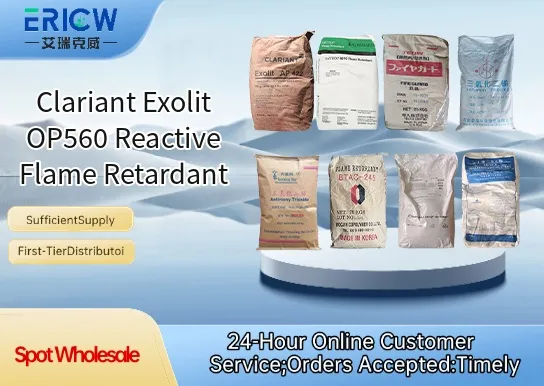
Reactive phosphorus-based flame retardant chemically bound into polyurethane (PU) and epoxy polymer backbones.
Provides permanent flame resistance without leaching or migration during service life.
Enables UL 94 V-0 rating in rigid and flexible PU foams at low loading levels (typically 10–15 wt%).
Minimal impact on mechanical properties, foam density, and processing viscosity compared to additive alternatives.
Halogen-free formulation supporting environmental compliance and low smoke/toxicity requirements.
Rigid polyurethane foam for building insulation panels and sandwich cores.
Flexible polyurethane foam used in automotive seating and interior trim.
Epoxy resin systems for electrical encapsulation and printed circuit board laminates.
Cast polyurethane elastomers in transportation and industrial components.
Reaction-injection molded (RIM) polyurethane parts requiring fire-safe performance.
| Chemical Type | Phosphonate-based reactive monomer |
| Product Form | Liquid |
| Appearance | Pale yellow to colorless clear liquid |
| Density (20 °C) | 1.23–1.27 g/cm³ |
| Viscosity (25 °C) | 250–450 mPa·s |
| Phosphorus Content | 10.2–10.8 wt% |
| Reactivity | Reacts with isocyanates (PU) and epoxides (epoxy resins) |
| Storage Stability | Stable under dry, cool conditions (<30 °C); protect from moisture |
Q1: What type of polymer systems is Exolit OP560 designed for?
A: Exolit OP560 is a reactive phosphorus-based flame retardant specifically developed for unsaturated polyester (UP) resins and vinyl ester resins, where it co-polymerizes into the resin backbone to provide permanent, non-migrating flame retardancy.
Q2: How does Exolit OP560 differ from additive flame retardants in UP systems?
A: Unlike additive flame retardants, which remain physically dispersed and may leach or bloom over time, Exolit OP560 chemically bonds into the polymer network during curing—offering superior permanence, improved mechanical property retention, and enhanced resistance to extraction or weathering.
Q3: What is the typical dosage range for Exolit OP560 in flame-retarded UP formulations?
A: Dosage depends on the specific formulation and required fire performance, but Exolit OP560 is typically used at low concentrations—generally ranging from 0.1% to 2% by weight relative to the total resin solids—to achieve UL 94 V-0 or equivalent performance in cast or pultruded parts.
Q4: Does Exolit OP560 affect the processing or curing behavior of unsaturated polyesters?
A: Exolit OP560 is compatible with standard peroxide initiators and exhibits minimal impact on gel time or peak exotherm under typical processing conditions; however, fine-tuning of initiator type and concentration may be advisable depending on the overall formulation complexity and target cure profile.
Q5: Is Exolit OP560 suitable for applications requiring low smoke and halogen-free performance?
A: Yes—Exolit OP560 is a halogen-free, phosphorus-based solution that contributes to reduced flame spread and significantly lower smoke density compared to many brominated alternatives, making it well-suited for transportation, construction, and electrical applications where low-smoke, zero-halogen (LSZH) characteristics are valued.
Contact With Us:
E-mail: wangxingqiang@ericwchem.com
Have a Questions? Call Us:
Add:
Building A1, Jiete Industrial Park, Huangpu District, Guangzhou City, Guangdong Province, China