English
 Español
 tiếng việt
 русский
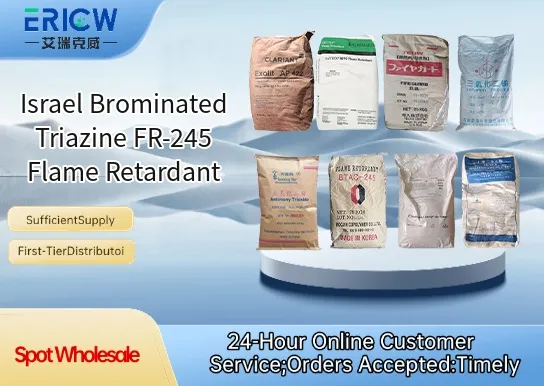
High bromine content (≥68%) for superior flame inhibition in polymer matrices.
Thermally stable up to 300°C, supporting processing in engineering thermoplastics.
Low volatility and minimal migration, ensuring long-term flame-retardant performance.
Compatible with polypropylene (PP), ABS, and HIPS without significant impact on mechanical properties.
Meets UL 94 V-0 rating at appropriate loadings in standard test configurations.
Flame-retarded polypropylene for automotive interior components.
ABS-based electronic housings requiring UL 94 compliance.
HIPS for consumer appliance casings and business equipment enclosures.
Blends with styrenic polymers in wire & cable jacketing compounds.
Engineering plastic formulations for industrial control panels and junction boxes.
| Chemical Type | Brominated triazine derivative |
| Product Form | Free-flowing white crystalline powder |
| Appearance | White to off-white granular solid |
| Bromine Content (by GC) | 68.0–69.5 wt% |
| Onset Decomposition Temperature (TGA, N₂) | ≥300°C |
| Moisture Content (Karl Fischer) | ≤0.15 wt% |
| Residue on Ignition (550°C, 1 hr) | ≤0.3 wt% |
| Primary Applications | Polyolefins, ABS, HIPS, styrenic blends |
Q1: What types of polymers is FR-245 most commonly used in?
A: FR-245 is primarily formulated for use in engineering thermoplastics such as polyamide (PA6, PA66), polybutylene terephthalate (PBT), and polycarbonate (PC) blends, where high thermal stability and efficient flame retardancy are required.
Q2: How does FR-245 perform under processing conditions like injection molding or extrusion?
A: FR-245 exhibits excellent thermal stability and low volatility, making it suitable for high-temperature melt processing. It maintains consistent performance during repeated extrusion passes and shows minimal degradation or plate-out in standard injection molding cycles.
Q3: Is FR-245 compatible with common polymer additives such as UV stabilizers, lubricants, or impact modifiers?
A: Yes, FR-245 demonstrates good compatibility with a broad range of functional additives used in engineering plastics formulations, including hindered amine light stabilizers (HALS), phosphite antioxidants, and elastomeric impact modifiers—though compatibility should always be verified in the final compound.
Q4: What is the typical dosage range for achieving V-0 rating in UL 94 tests?
A: Dosage depends on the base polymer, filler content, and overall formulation, but FR-245 is generally effective at low concentrations—typically ranging from 0.1% to 2% by weight—to achieve V-0 classification in thin-section applications when properly compounded.
Contact With Us:
E-mail: wangxingqiang@ericwchem.com
Have a Questions? Call Us:
Add:
Building A1, Jiete Industrial Park, Huangpu District, Guangzhou City, Guangdong Province, China