English
 Español
 tiếng việt
 русский
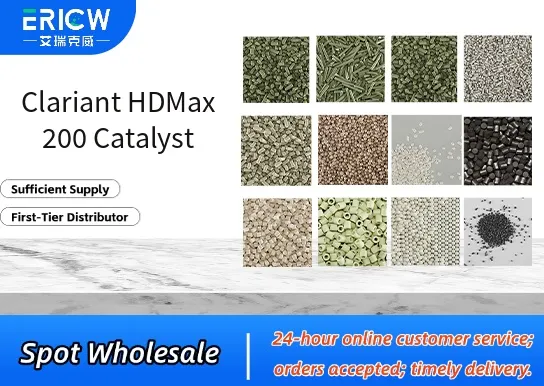
Highly selective hydrogenation catalyst optimized for removal of alkynes and dienes in C₂–C₄ olefin streams.
Exceptional resistance to sulfur poisoning, enabling stable performance in feedstocks with trace sulfur contaminants.
Controlled metal dispersion on high-surface-area alumina support ensures consistent activity and extended service life.
Low nickel loading minimizes green oil formation and reduces downstream fouling in polymer-grade ethylene units.
Designed for fixed-bed operation with excellent mechanical strength and low pressure drop characteristics.
Ethylene purification units for polymer-grade ethylene production.
Propylene upgrading in petrochemical crackers and refineries.
C₄ stream selective hydrogenation (e.g., butadiene removal from raffinate-1).
Front-end hydrogenation in steam cracker off-gas processing.
Olefin recovery units requiring high-purity mono-olefin output.
| Chemical Type | Nickel-based supported hydrogenation catalyst |
| Product Form | Extrudates (cylindrical pellets) |
| Appearance | Gray to dark gray solid |
| Primary Applications | Selective hydrogenation of alkynes/dienes in light olefin streams |
| Key Features | Sulfur-tolerant, low green oil yield, high selectivity |
| Benefits | Extended run length, reduced shutdown frequency, improved product purity |
| Typical Bulk Density | 0.85–0.95 g/cm³ |
| Operating Temperature Range | 30–120 °C (dependent on application) |
Q1: What is the primary function of HDMax 200 in polymer processing?
A: HDMax 200 is a high-performance peroxide decomposition catalyst designed to selectively control crosslinking kinetics in thermoplastic elastomers and polyolefin-based compounds—particularly during dynamic vulcanization or reactive extrusion processes.
Q2: Is HDMax 200 compatible with common peroxides used in TPE formulations?
A: Yes, HDMax 200 is engineered for compatibility with widely used organic peroxides such as dicumyl peroxide and 2,5-dimethyl-2,5-di(tert-butylperoxy)hexane, enabling precise tuning of scission versus crosslinking balance in EPDM/PP TPVs.
Q3: How does HDMax 200 affect final compound properties compared to conventional catalysts?
A: HDMax 200 promotes more uniform crosslink distribution and reduced gel formation, often resulting in improved melt stability, enhanced tensile recovery, and better long-term compression set performance—especially in demanding automotive and sealing applications.
Q4: What are typical handling and storage recommendations for HDMax 200?
A: HDMax 200 should be stored in its original sealed container under cool, dry conditions away from direct sunlight and strong oxidizing agents. It is recommended to process within 12 months of receipt and to avoid prolonged exposure to ambient humidity during handling.
Q5: Can HDMax 200 be used in food-contact or medical-grade polymer systems?
A: HDMax 200 is not pre-approved for direct food-contact or implantable medical applications. Its suitability for regulated end uses must be evaluated case-by-case through full formulation testing and compliance verification with applicable regional regulatory frameworks.
Contact With Us:
E-mail: wangxingqiang@ericwchem.com
Have a Questions? Call Us:
Add:
Building A1, Jiete Industrial Park, Huangpu District, Guangzhou City, Guangdong Province, China