English
 Español
 tiếng việt
 русский
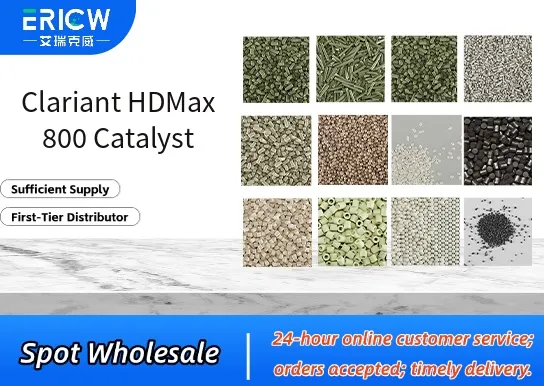
Highly selective hydrogenation catalyst for unsaturated aldehydes and ketones.
Thermally stable nickel–molybdenum oxide formulation with optimized metal dispersion.
Low dust generation and excellent flow characteristics for safe handling in continuous processes.
Designed for extended service life under moderate-pressure fixed-bed reactor conditions.
Reduced noble metal dependency, offering cost-effective performance versus palladium-based alternatives.
Hydrogenation of crotonaldehyde to butyraldehyde in fine chemical synthesis.
Selective reduction of α,β-unsaturated carbonyls in pharmaceutical intermediate manufacturing.
Upgrading bio-based platform molecules such as furfural and levulinic acid derivatives.
Production of saturated alcohols from corresponding aldehydes in agrochemical intermediates.
Catalytic processing of oxygenated hydrocarbons in renewable fuel blending components.
| Chemical Type | Nickel–molybdenum oxide on high-surface-area alumina support |
| Product Form | Extruded cylindrical pellets (1.8–2.2 mm diameter) |
| Appearance | Gray-black free-flowing granular solid |
| Primary Applications | Selective liquid-phase and fixed-bed vapor-phase hydrogenation |
| Key Features | High chemoselectivity, low methane formation, sulfur-tolerant design |
| Benefits | Improved yield, reduced downstream separation burden, longer cycle length |
| Storage Conditions | Store in sealed containers under inert atmosphere; avoid moisture exposure |
| Handling Precautions | Use in well-ventilated areas; avoid inhalation of dust; refer to SDS for full guidance |
Q1: What is the primary function of HDMax 800 in polyolefin processing?
A: HDMax 800 is a high-performance peroxide decomposition catalyst designed to selectively control crosslinking and scission reactions during the melt processing of polyolefins—particularly in applications such as controlled rheology PP and crosslinked PE cable compounds.
Q2: How does HDMax 800 differ from conventional metal stearate catalysts?
A: Unlike traditional metal stearates, HDMax 800 offers enhanced thermal stability and more predictable decomposition kinetics, enabling finer control over molecular weight distribution without promoting excessive gel formation or discoloration under typical extrusion conditions.
Q3: Is HDMax 800 compatible with common polymer additives such as antioxidants and acid scavengers?
A: Yes—HDMax 800 has been formulated for compatibility with standard phenolic and phosphite antioxidants, as well as calcium-based acid scavengers, when used at typical dosage levels. However, interaction studies are recommended for formulations containing highly reactive co-additives.
Q4: What are the recommended handling and storage conditions for HDMax 800?
A: HDMax 800 should be stored in its original sealed container under cool, dry conditions, protected from moisture and direct sunlight. It is stable for extended periods when stored below 30 °C and away from strong oxidizing agents or reducing substances.
Contact With Us:
E-mail: wangxingqiang@ericwchem.com
Have a Questions? Call Us:
Add:
Building A1, Jiete Industrial Park, Huangpu District, Guangzhou City, Guangdong Province, China