English
 Español
 tiếng việt
 русский
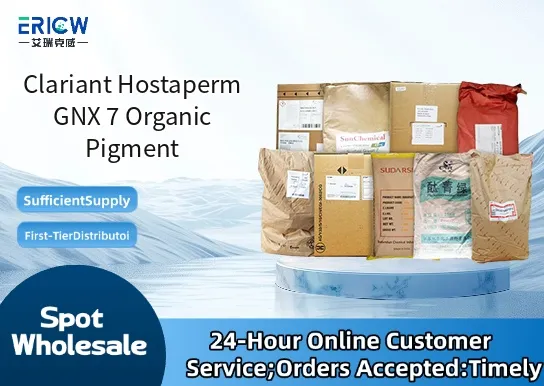
High chroma greenish-yellow shade with excellent color strength and clean hue.
Outstanding thermal stability suitable for high-temperature processing up to 280 °C.
Good lightfastness and weather resistance in demanding outdoor applications.
Excellent dispersibility in both polar and non-polar polymer systems.
Low migration behavior, meeting stringent requirements for food-contact and toy safety standards.
Polyolefin masterbatches (PP, PE) for automotive interior parts.
Engineering plastics including ABS, PS, and PC for consumer electronics housings.
Flexible and rigid PVC compounds for building & construction profiles.
Thermoplastic elastomers (TPE) used in medical device components.
High-performance inks for packaging films requiring FDA-compliant pigmentation.
| Chemical Type | Disazo pigment (Pigment Yellow 154) |
| Product Form | Fine powder |
| Appearance | Greenish-yellow free-flowing powder |
| Primary Applications | Polyolefins, engineering plastics, PVC, TPE, packaging inks |
| Key Features | High heat stability, low migration, excellent dispersion |
| Benefits | Consistent color reproduction, regulatory compliance support, processing robustness |
| Regulatory Status | Complies with EU REACH; meets FDA 21 CFR §178.3297 for polymer additives |
| Recommended Carrier | Polyethylene or polypropylene wax-based carriers |
Q1: What is the primary chemical class and typical application focus of Hostaperm GNX 7?
A: Hostaperm GNX 7 is a high-performance perylene-based organic pigment, engineered for demanding applications requiring excellent lightfastness, thermal stability, and weather resistance. It is predominantly used in automotive coatings, industrial finishes, and high-end plastics where long-term color integrity under UV exposure and elevated processing temperatures is critical.
Q2: Is Hostaperm GNX 7 suitable for use in polyolefin compounds, and what dispersion considerations apply?
A: Yes, Hostaperm GNX 7 is compatible with polyolefins including PP and PE, and is commonly used in injection-molded and extruded parts. Due to its high molecular weight and crystalline structure, effective dispersion typically requires high-shear compounding—preferably using masterbatches with optimized carrier resins and dispersing aids—to achieve uniform color development and avoid agglomeration.
Q3: How does Hostaperm GNX 7 perform in terms of heat stability during polymer processing?
A: Hostaperm GNX 7 exhibits very good thermal stability, maintaining color strength and hue integrity at typical polymer processing temperatures up to 300 °C for short residence times. It is especially suited for engineering thermoplastics such as PA, PBT, and PC, where extended melt exposure may occur.
Q4: What are the recommended handling and storage conditions to preserve pigment performance?
A: Store in original sealed packaging in a cool, dry place away from direct sunlight and sources of heat or moisture. Avoid prolonged exposure to humid environments, as moisture absorption can affect dispersion behavior in hydrophobic systems. Always follow standard occupational hygiene practices when handling fine organic pigments—including appropriate ventilation and personal protective equipment.
Q5: Can Hostaperm GNX 7 be used in food-contact plastic applications?
A: Hostaperm GNX 7 is not pre-approved for direct food-contact applications under major global regulatory frameworks. Its suitability for such uses depends entirely on final formulation assessment, migration testing, and compliance verification by the compounder or end-user against applicable regional regulations—including FDA, EFSA, or other relevant authorities.
Contact With Us:
E-mail: wangxingqiang@ericwchem.com
Have a Questions? Call Us:
Add:
Building A1, Jiete Industrial Park, Huangpu District, Guangzhou City, Guangdong Province, China