English
 Español
 tiếng việt
 русский
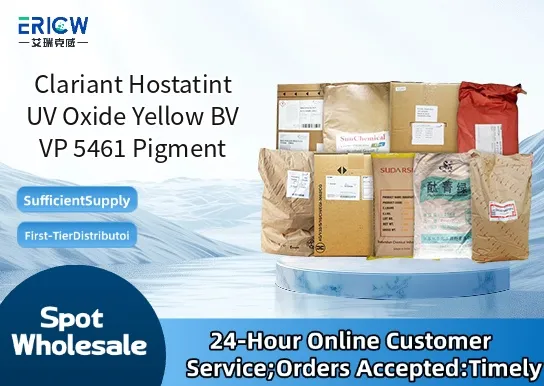
High chroma yellow shade with excellent color strength and clean undertone.
Outstanding UV stability and lightfastness for long-term outdoor performance.
Good thermal stability suitable for high-temperature processing up to 220 °C.
Low volatility and minimal extractables, meeting stringent regulatory requirements.
Optimized particle size distribution for smooth dispersion and high gloss in final films.
Automotive coatings (OEM and refinish).
Industrial coil and can coatings.
Plastic coloration for exterior automotive parts.
High-performance powder coatings.
Engineering thermoplastics requiring weather resistance.
| Chemical Type | Mixed Metal Oxide (Iron-Zinc-Cobalt based) |
| Product Form | Free-flowing dry powder |
| Appearance | Yellow to orange-yellow powder |
| Primary Applications | Coatings, engineering plastics, powder coatings |
| Key Features | UV-stable, heat-resistant, low migration |
| Benefits | Long-term color retention, process robustness, regulatory compliance (REACH, RoHS) |
| Typical Particle Size (D50) | 0.3–0.5 µm |
| Density | ~4.8 g/cm³ |
Q1: What is the primary application field for Hostatint UV Oxide Yellow BV VP 5461?
A: This pigment is specifically engineered for high-performance UV-curable inks and coatings, including screen, inkjet, and flexographic formulations where excellent photostability, fine particle dispersion, and low migration potential are required.
Q2: Is this pigment suitable for food-contact applications?
A: Hostatint UV Oxide Yellow BV VP 5461 is designed with low extractability and high thermal stability, making it a candidate for certain indirect food-contact systems—however, final regulatory compliance must be verified by the formulator based on the complete formulation, processing conditions, and applicable regional regulations.
Q3: How does this pigment perform under UV curing conditions?
A: It demonstrates excellent compatibility with common UV photoinitiator systems and shows minimal interference with cure kinetics. Its inorganic oxide-based chemistry ensures high resistance to yellowing or fading during and after UV exposure.
Q4: What are the recommended dispersion methods for optimal performance?
A: For best results, pre-dispersion using high-shear mixing or bead milling is recommended. The pigment is compatible with standard UV resin vehicles such as acrylated oligomers and monomers, and benefits from stabilization with appropriate dispersants tailored for polar UV systems.
Contact With Us:
E-mail: wangxingqiang@ericwchem.com
Have a Questions? Call Us:
Add:
Building A1, Jiete Industrial Park, Huangpu District, Guangzhou City, Guangdong Province, China