English
 Español
 tiếng việt
 русский
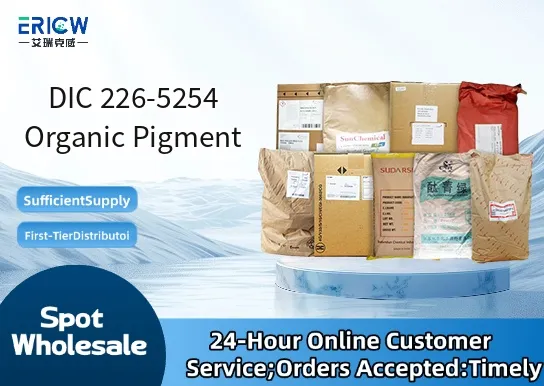
High chroma and excellent color strength in transparent red shade.
Good thermal stability up to 220°C, suitable for medium-temperature processing.
Outstanding lightfastness (Grade 7–8 per ISO 105-B02) in polymer systems.
Low migration tendency in PVC and polyolefin compounds.
Excellent dispersion performance with standard dispersing aids in aqueous and solvent-based systems.
General-purpose inks for packaging gravure and flexographic printing.
Color concentrates for polypropylene (PP) and high-density polyethylene (HDPE).
Automotive interior plastic components requiring durable red tones.
Industrial coatings for metal and plastic substrates.
Paper coating and decorative laminates requiring transparency and gloss retention.
| Chemical Type | Quinacridone derivative |
| Product Form | Free-flowing powder |
| Appearance | Red-violet fine powder |
| Primary Applications | Inks, plastics, coatings |
| Key Features | High transparency, good dispersibility, low volatility |
| Benefits | Consistent batch-to-batch color, minimal dust generation during handling |
| Recommended Dispersants | Polymeric dispersants (e.g., DISPERBYK®-190), fatty acid derivatives |
| Storage Conditions | Store in cool, dry place; avoid direct sunlight and moisture |
Q1: What is the primary chemical class and typical hue profile of DIC 226-5254?
A: DIC 226-5254 is a high-performance quinacridone-based organic pigment, offering strong violet-red to bluish-red shades with excellent chroma and clean undertones. Its molecular structure delivers inherent lightfastness and weather resistance suitable for demanding applications.
Q2: Is DIC 226-5254 suitable for use in food-contact plastics or packaging inks?
A: This pigment is not pre-approved for direct food-contact applications under major global regulatory frameworks. It may be considered for non-migrating applications in outer packaging layers or industrial films where regulatory compliance is verified by the end-formulator. Always consult current local regulations and conduct appropriate migration testing if intended for indirect food contact.
Q3: How does DIC 226-5254 perform in high-temperature polymer processing, such as polypropylene or PET compounding?
A: DIC 226-5254 demonstrates good thermal stability up to approximately 280–300 °C, making it suitable for standard PP and HDPE coloring processes. For PET melt processing or extended residence times at elevated temperatures, stabilization additives and careful process control are recommended to maintain optimal color strength and dispersion integrity.
Q4: What is the recommended dispersion method for achieving optimal color development in solvent-based coatings?
A: For solvent-based systems, high-shear dispersion using media mills (e.g., bead mills) or three-roll mills is strongly recommended. Pre-wetting with compatible solvents and resin solutions helps prevent agglomeration. Optimal performance is typically achieved when the pigment is fully incorporated into the vehicle prior to let-down.
Contact With Us:
E-mail: wangxingqiang@ericwchem.com
Have a Questions? Call Us:
Add:
Building A1, Jiete Industrial Park, Huangpu District, Guangzhou City, Guangdong Province, China