English
 Español
 tiếng việt
 русский
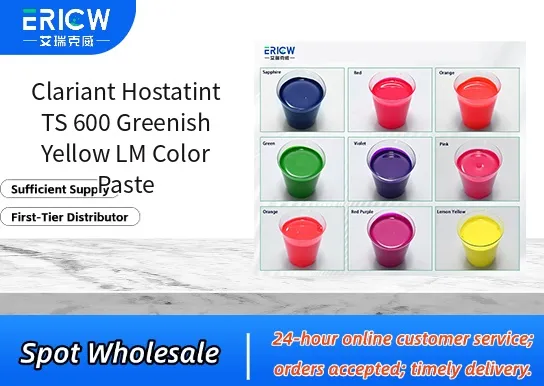
High chroma greenish yellow shade with excellent lightfastness and weather resistance.
Optimized for low migration in polyolefin compounds, ensuring color stability during processing and end-use.
Free of heavy metals and compliant with major global regulatory frameworks including EU REACH and US FDA (for indirect food contact applications).
Excellent dispersibility in thermoplastic matrices, enabling uniform coloration with minimal mixing energy.
LM (Low Migration) grade specifically engineered for sensitive applications such as toys, packaging films, and healthcare products.
Polypropylene (PP) and polyethylene (PE) injection-molded consumer goods.
Blown and cast films for flexible packaging requiring low-migration compliance.
Automotive interior components where long-term color retention under UV exposure is critical.
Medical device housings and pharmaceutical packaging materials.
Toy manufacturing complying with ISO 8124-3 and ASTM F963 extractable limits.
| Chemical Type | Organic pigment dispersion |
| Product Form | Thixotropic paste |
| Appearance | Greenish yellow viscous paste |
| Primary Applications | Polyolefins (PP, PE), TPO, ABS |
| Key Features | Low migration, high thermal stability up to 280 °C |
| Benefits | Consistent batch-to-batch color accuracy, reduced filter pressure during extrusion |
| Regulatory Compliance | EU REACH registered; RoHS compliant; non-GMO |
| Recommended Carrier System | Polyolefin-compatible mineral oil and polymer wax blend |
Q1: What types of polymers is Hostatint TS 600 Greenish Yellow LM compatible with?
A: This liquid color paste is specifically formulated for use in polyolefins—including polypropylene (PP) and polyethylene (PE)—and demonstrates good compatibility with thermoplastic elastomers (TPEs) and certain engineering plastics. Performance in polar resins such as PET or PC may require evaluation due to differences in polarity and thermal stability.
Q2: Is Hostatint TS 600 suitable for food-contact applications?
A: Hostatint TS 600 is designed to meet general regulatory expectations for indirect food contact in polyolefin packaging, subject to final formulation compliance and processing conditions. It contains no intentionally added heavy metals or restricted azo dyes. End-use compliance must be verified by the compounder or converter against applicable regional regulations and migration testing requirements.
Q3: How should this color paste be incorporated into polymer melts?
A: Hostatint TS 600 is typically dosed directly into the extruder feed throat or via a gravimetric side feeder. Its liquid form enables excellent dispersion at low shear, especially in twin-screw extrusion. Pre-blending with masterbatch carriers or diluents is not required, though thorough mixing prior to feeding is recommended for consistent dosing.
Q4: Does this product offer good thermal stability during standard polyolefin processing?
A: Yes—Hostatint TS 600 is engineered for stability under typical PP and PE processing temperatures (up to approximately 260 °C). It maintains color integrity and shows minimal degradation or gas evolution during conventional extrusion and injection molding, supporting consistent batch-to-batch appearance.
Q5: What is the typical dosage range for achieving target color strength?
A: Dosage depends on the base polymer, desired shade intensity, and processing method, but it is generally used at low concentrations—typically ranging from 0.1% to 2% by weight. Because of its high chroma and efficient dispersion, lower dosages often suffice compared to dry pigment systems.
Contact With Us:
E-mail: wangxingqiang@ericwchem.com
Have a Questions? Call Us:
Add:
Building A1, Jiete Industrial Park, Huangpu District, Guangzhou City, Guangdong Province, China