English
 Español
 tiếng việt
 русский
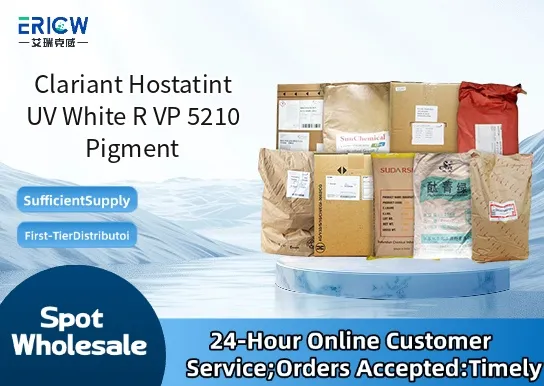
High-performance UV-stable white pigment specifically engineered for demanding UV-curable coating and ink systems.
Excellent dispersion stability in acrylate-based formulations without compromising cure speed or film integrity.
Superior hiding power and brightness, delivering consistent whiteness and optical clarity in thin-film applications.
Low volatility and non-migrating character, ensuring long-term color fidelity and compliance with stringent regulatory requirements.
Optimized particle size distribution for enhanced flow, gloss retention, and minimal abrasion in high-speed printing processes.
UV-curable offset and flexographic inks for premium packaging and labeling.
UV-curable decorative coatings on plastic substrates including PET, PP, and ABS.
Industrial UV-curable wood coatings requiring high opacity and surface hardness.
Electronics-grade conformal coatings where thermal stability and dielectric performance are critical.
Automotive interior trim coatings demanding exceptional weather resistance and low VOC emissions.
| Chemical Type | Inorganic white pigment (surface-modified titanium dioxide) |
| Product Form | Free-flowing dry powder |
| Appearance | White to off-white fine powder |
| Primary Applications | UV-curable inks, coatings, and varnishes |
| Key Features | UV stability, high dispersibility, low haze, non-yellowing |
| Benefits | Improved print definition, faster cure response, reduced formulation viscosity |
| Storage Conditions | Store in original sealed container at 5–30 °C, protect from moisture |
| Regulatory Compliance | REACH registered; compliant with EU Directive 2009/148/EC for nanomaterials (where applicable) |
Q1: What is the primary function of Hostatint UV White R VP 5210 in polymer applications?
A: Hostatint UV White R VP 5210 is a high-performance, non-bleeding white pigment designed to provide strong opacity and brightness in UV-curable systems and thermoplastic polymers, particularly where thermal stability and lightfastness are critical.
Q2: Is this pigment suitable for food-contact or medical-grade polymer formulations?
A: Hostatint UV White R VP 5210 is not pre-approved for direct food-contact or implantable medical applications. Its suitability must be evaluated case-by-case based on final formulation, processing conditions, and regulatory requirements in the target market.
Q3: How does this pigment perform under UV exposure compared to conventional titanium dioxide-based whites?
A: Unlike standard TiO₂ pigments, Hostatint UV White R VP 5210 is engineered to minimize photocatalytic activity while maintaining high whiteness and dispersion stability in UV-cured coatings and inks — reducing yellowing and surface degradation over time.
Q4: What types of polymer systems show optimal compatibility with this pigment?
A: It demonstrates excellent compatibility in acrylate-based UV-curable resins, polyolefins, and certain engineering thermoplastics. Performance may vary in highly polar or acidic media; pre-testing for dispersion stability and color development is recommended.
Q5: What is the typical dosage range when using this pigment in masterbatches or end-use formulations?
A: Dosage depends on the required opacity, substrate thickness, and processing method, but it is typically used at low concentrations — generally ranging from 0.1% to 2% by weight in final polymer systems.
Contact With Us:
E-mail: wangxingqiang@ericwchem.com
Have a Questions? Call Us:
Add:
Building A1, Jiete Industrial Park, Huangpu District, Guangzhou City, Guangdong Province, China