English
 Español
 tiếng việt
 русский
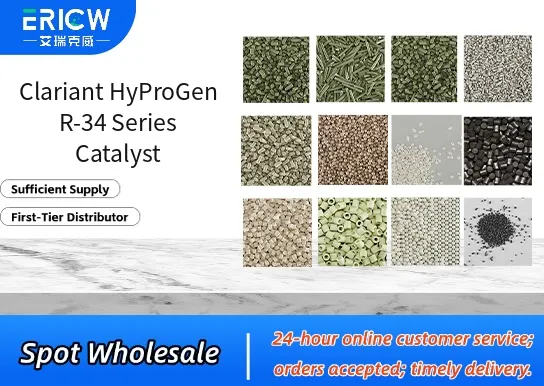
Highly selective hydrogenation catalyst optimized for saturated aldehyde and ester reduction under mild conditions.
Robust thermal and chemical stability enabling extended service life in continuous fixed-bed reactors.
Low metal leaching performance, ensuring product purity and compliance with stringent pharmaceutical intermediate specifications.
Tailored pore structure for improved mass transfer and reduced diffusion limitations in viscous feedstocks.
Consistent batch-to-batch reproducibility supported by Clariant’s ISO 9001-certified manufacturing control system.
Production of high-purity fatty alcohols from triglyceride-derived methyl esters in oleochemical processing.
Synthesis of chiral intermediates for active pharmaceutical ingredients (APIs) requiring stereo-retentive hydrogenation.
Hydrogenation of unsaturated lactones and cyclic ketones in fine chemical manufacturing.
Upgrading bio-based platform molecules such as furfural and levulinic acid derivatives.
Continuous-flow hydrogenation of aromatic nitro compounds to corresponding anilines with minimal over-reduction.
| Chemical Type | Ruthenium-based heterogeneous catalyst on tailored carbon support |
| Product Form | Free-flowing granular solid |
| Appearance | Gray-black cylindrical pellets (1.5–2.5 mm diameter) |
| Primary Applications | Selective hydrogenation of carbonyl groups in fine chemicals and bio-based feedstocks |
| Key Features | High activity at 50–120 °C and 1–50 bar H₂; sulfur-tolerant formulation |
| Benefits | Reduced catalyst inventory, lower operating pressure, and simplified downstream purification |
| Storage Conditions | Store under inert atmosphere (N₂ or Ar) at ambient temperature; protect from moisture and oxidizing agents |
| Handling Precautions | Use in well-ventilated area; avoid contact with strong acids or halogenated solvents |
Q1: What is the primary function of the HyProGen R-34 Series in polyurethane systems?
A: The HyProGen R-34 Series is a non-tin, metal-free catalyst system designed to promote selective urethane bond formation—particularly effective in balancing reactivity between isocyanate and polyol components while minimizing side reactions such as trimerization or hydrolysis.
Q2: Is the HyProGen R-34 Series compatible with water-blown flexible foam formulations?
A: Yes, it demonstrates good compatibility and performance stability in water-blown flexible slabstock and molded foam systems, supporting consistent cell structure development and efficient demolding—even under variable ambient humidity conditions.
Q3: How does HyProGen R-34 differ from traditional amine-based catalysts in terms of odor and volatility?
A: Unlike many volatile tertiary amines, the R-34 Series features low-volatility, non-volatile components that significantly reduce odor emissions during processing and in final foam products—making it suitable for applications with stringent indoor air quality requirements.
Q4: Can HyProGen R-34 be used in combination with other catalysts?
A: Yes, it is formulated for synergistic use with complementary catalysts—including delayed-action or gelling-specific types—to fine-tune cream time, rise profile, and cure kinetics without compromising storage stability or pot life.
Contact With Us:
E-mail: wangxingqiang@ericwchem.com
Have a Questions? Call Us:
Add:
Building A1, Jiete Industrial Park, Huangpu District, Guangzhou City, Guangdong Province, China