English
 Español
 tiếng việt
 русский
Highly selective hydrogenation catalyst for unsaturated aldehydes and ketones.
Thermally stable nickel-based formulation with optimized metal dispersion.
Low dust generation and excellent handling safety in industrial processing units.
Consistent activity and extended service life under continuous fixed-bed operation.
Designed for compatibility with standard refinery-grade hydrogen and feed pretreatment systems.
Hydrogenation of citral to geraniol and nerol in fragrance intermediate synthesis.
Selective reduction of α,β-unsaturated carbonyls in pharmaceutical fine chemical manufacturing.
Conversion of cinnamaldehyde to hydrocinnamaldehyde for flavor and aroma applications.
Upgrading of bio-derived platform molecules in sustainable chemical production.
Processing of specialty aldehyde streams in multi-product batch hydrogenation plants.
| Chemical Type | Nickel-based heterogeneous hydrogenation catalyst |
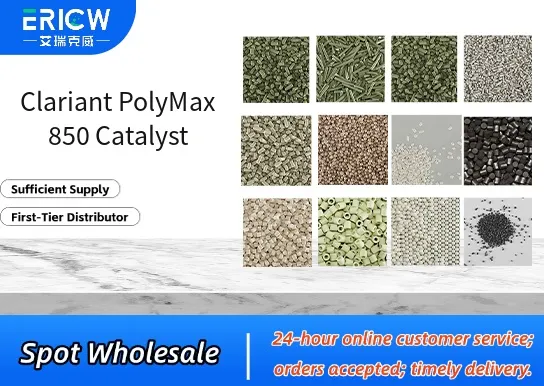
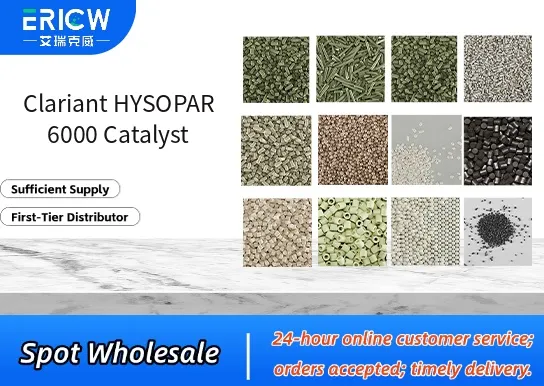
| Product Form | Extrudates (cylindrical pellets) |
| Appearance | Gray-black solid, free-flowing granules |
| Primary Applications | Selective hydrogenation of α,β-unsaturated aldehydes and ketones |
| Key Features | High chemoselectivity, low methane formation, thermal stability up to 200 °C |
| Benefits | Reduced over-hydrogenation, improved yield of unsaturated alcohols, lower catalyst consumption |
| Handling Precautions | Air-sensitive; supplied under inert atmosphere; recommended storage under nitrogen |
| Regulatory Status | REACH registered; non-GHS classified for transport (UN3077, Class 9) |
Q1: What is the primary function of HYSOPAR 6000 in hydroprocessing applications?
A: HYSOPAR 6000 is a high-activity hydrotreating catalyst designed to facilitate desulfurization, denitrogenation, and saturation of aromatic compounds under moderate to severe operating conditions—particularly in fixed-bed reactors processing middle distillates and feedstocks with challenging impurity profiles.
Q2: Is HYSOPAR 6000 suitable for low-pressure or low-hydrogen-partial-pressure operations?
A: While optimized for conventional hydrotreating pressure ranges, HYSOPAR 6000 demonstrates robust performance even under reduced hydrogen partial pressure due to its tailored active phase dispersion and optimized support acidity—making it adaptable for refiners seeking flexibility across varying process configurations.
Q3: How does HYSOPAR 6000 compare to earlier-generation CoMo/Al₂O₃ catalysts in terms of stability and fouling resistance?
A: HYSOPAR 6000 incorporates advanced pore architecture and metal distribution technology, resulting in improved resistance to coking and metal deposition—especially during extended runs with heavier or higher-nitrogen feedstocks—thereby supporting longer cycle lengths and more consistent activity retention.
Q4: Can HYSOPAR 6000 be used in combination with other Clariant catalysts in layered-bed configurations?
A: Yes—HYSOPAR 6000 is engineered for compatibility in multi-catalyst systems, including staged or graded beds with guard catalysts or downstream finishing catalysts, enabling refiners to optimize overall reactor performance while managing feed variability and catalyst aging effects.
Contact With Us:
E-mail: wangxingqiang@ericwchem.com
Have a Questions? Call Us:
Add:
Building A1, Jiete Industrial Park, Huangpu District, Guangzhou City, Guangdong Province, China