English
 Español
 tiếng việt
 русский
Highly selective for propylene oxide (PO) production via the hydrogen peroxide to propylene oxide (HPPO) process.
Exceptional long-term stability under continuous industrial operation, minimizing catalyst change-out frequency.
Tailored titanium-silicalite (TS-1) active phase with optimized pore structure for enhanced mass transfer and reduced by-product formation.
Low metal leaching performance, ensuring consistent product purity and extended downstream equipment life.
Designed for seamless integration into existing HPPO reactor systems without major retrofit requirements.
Propylene oxide (PO) manufacturing via the hydrogen peroxide to propylene oxide (HPPO) process.
Co-production of PO and tert-butanol (TBA)-free grade glycols in integrated petrochemical complexes.
On-purpose PO supply for polyurethane precursors, including polyether polyols and propylene glycol.
High-purity PO synthesis for electronic-grade and pharmaceutical intermediate applications.
Energy-efficient oxidation catalysis in green chemistry initiatives targeting low-carbon footprint chemical manufacturing.
| Chemical Type | Titanium-containing silicalite-1 (TS-1) zeolite |
| Product Form | Free-flowing granular solid |
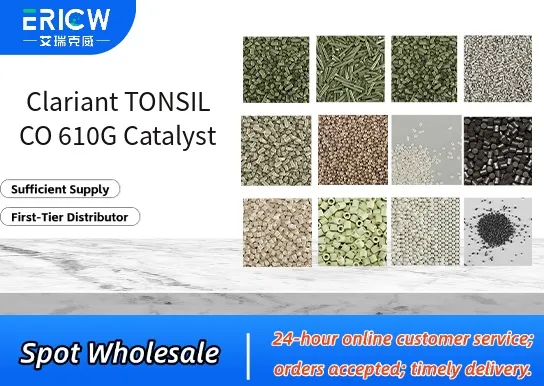
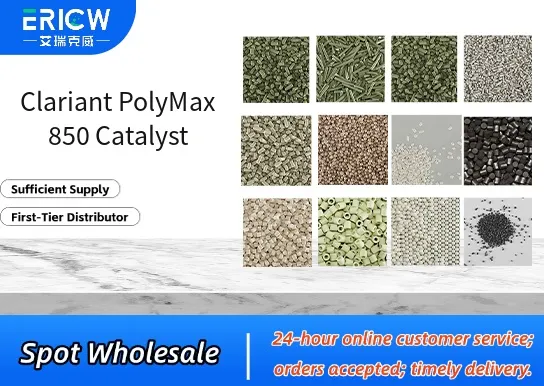
| Appearance | Light gray to off-white cylindrical extrudates |
| Primary Application | Catalyst for HPPO process (hydrogen peroxide + propylene → propylene oxide) |
| Key Features | High Ti dispersion, hydrophobic surface, narrow particle size distribution |
| Benefits | Improved PO selectivity (>95%), reduced H₂O₂ decomposition, lower waste generation |
| Storage Conditions | Store in dry, cool, well-ventilated area; protect from moisture and strong oxidizers |
| Handling Precautions | Use NIOSH-approved dust mask and gloves; avoid inhalation of dust |
Q1: What is the primary function of PolyMax 850 in polyolefin processing?
A: PolyMax 850 is a highly active metallocene-based catalyst system designed to enable precise control over polymer microstructure—particularly for producing linear low-density polyethylene (LLDPE) and ethylene-propylene copolymers with narrow molecular weight distribution and uniform comonomer incorporation.
Q2: How does PolyMax 850 differ from conventional Ziegler–Natta catalysts?
A: Unlike traditional Ziegler–Natta systems, PolyMax 850 offers single-site catalytic behavior, resulting in polymers with superior homogeneity, enhanced clarity, improved toughness, and more consistent melt rheology—making it especially suitable for demanding film and fiber applications.
Q3: Is PolyMax 850 compatible with standard polyolefin production equipment?
A: Yes—PolyMax 850 is formulated as a stable slurry in mineral oil and is fully compatible with conventional slurry, solution, and gas-phase polyolefin processes without requiring major modifications to existing reactor infrastructure or feed systems.
Q4: What handling precautions should be observed during storage and dosing?
A: PolyMax 850 must be stored under inert atmosphere (e.g., nitrogen or argon) at controlled ambient temperatures and protected from moisture and oxygen exposure. Dosing systems should maintain strict exclusion of air and use dedicated, clean, dry transfer lines to preserve catalytic activity and consistency.
Q5: What types of co-catalysts or activators are typically used with PolyMax 850?
A: PolyMax 850 is generally activated with alkylaluminum compounds such as triethylaluminum (TEAL) or modified alkylaluminums. The choice and molar ratio of co-catalyst depend on the specific process configuration and desired polymer properties, and optimization is recommended during scale-up.
Contact With Us:
E-mail: wangxingqiang@ericwchem.com
Have a Questions? Call Us:
Add:
Building A1, Jiete Industrial Park, Huangpu District, Guangzhou City, Guangdong Province, China