English
 Español
 tiếng việt
 русский
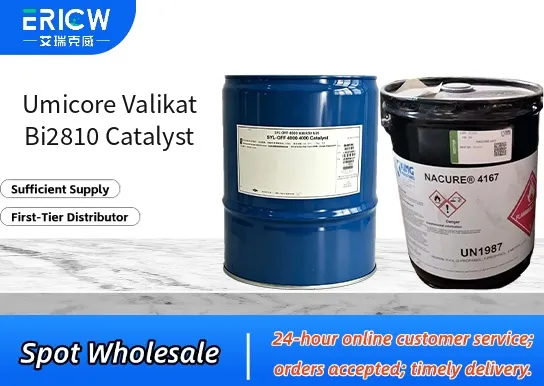
Highly selective bismuth-molybdate-based catalyst optimized for partial oxidation of propylene to acrolein.
Exceptional thermal stability under continuous industrial operating conditions up to 420 °C.
Precisely engineered microstructure ensuring uniform active phase distribution and minimized sintering.
Low attrition rate and robust mechanical integrity for extended service life in fixed-bed reactors.
Consistent batch-to-batch performance validated through Umicore’s proprietary quality control protocols.
Acrolein production via catalytic partial oxidation of propylene in large-scale chemical plants.
Intermediate synthesis for acrylic acid and glycerol derivatives in specialty chemical manufacturing.
Co-catalyst component in multi-stage oxidation processes for fine chemical intermediates.
Replacement catalyst in existing acrolein production units requiring improved selectivity and yield.
| Chemical Type | Bismuth molybdate (Bi-Mo-O) complex with promoted oxide additives |
| Product Form | Cylindrical extrudates (3.0 mm diameter × 3–5 mm length) |
| Appearance | Grayish-black, free-flowing solid granules |
| Primary Applications | Propylene to acrolein partial oxidation |
| Key Features | High acrolein selectivity (>85%), low COx formation, stable activity over >12 months |
| Recommended Operating Temperature | 360–420 °C |
| Specific Surface Area (BET) | 8–12 m²/g |
| Packaging | Sealed steel drums (25 kg net) or bulk containers under inert atmosphere |
Q1: What is the primary function of Umicore Valikat Bi2810 in silicone rubber formulations?
A: Valikat Bi2810 is a platinum-based catalyst designed to promote efficient hydrosilylation curing in addition-cure liquid silicone rubber (LSR) and high-consistency rubber (HCR) systems. It enables rapid, uniform crosslinking at elevated temperatures while supporting excellent shelf stability in uncured compounds.
Q2: How does Valikat Bi2810 compare to standard Karstedt-type catalysts in terms of inhibition and processing safety?
A: Valikat Bi2810 incorporates proprietary thermal inhibition technology, offering extended pot life at ambient temperatures and reduced risk of premature cure during mixing or storage—particularly beneficial for high-shear LSR processing and multi-component dispensing systems.
Q3: Is Valikat Bi2810 suitable for medical-grade or food-contact silicone applications?
A: Yes—Valikat Bi2810 is formulated without heavy metals such as tin or lead and is compatible with regulatory requirements for medical device elastomers and food-contact materials when used in accordance with Good Manufacturing Practice and final formulation validation.
Q4: What are typical handling and storage recommendations for this catalyst?
A: Store in original sealed containers under inert atmosphere at temperatures between 5 °C and 25 °C, protected from moisture, direct sunlight, and oxidizing agents. Avoid contact with nitrogen-containing compounds, sulfur, phosphines, or heavy metal salts, which may cause irreversible deactivation.
Contact With Us:
E-mail: wangxingqiang@ericwchem.com
Have a Questions? Call Us:
Add:
Building A1, Jiete Industrial Park, Huangpu District, Guangzhou City, Guangdong Province, China