English
 Español
 tiếng việt
 русский
Highly selective palladium-based heterogeneous catalyst for controlled hydrogenation reactions.
Thermally stable up to 180 °C, enabling robust performance in elevated-temperature processes.
Low metal leaching profile, ensuring product purity and reduced downstream contamination risks.
Consistent batch-to-batch reproducibility supported by stringent QC protocols and ISO-certified manufacturing.
Designed for easy handling and integration into existing fixed-bed or slurry-phase reactor systems.
Hydrogenation of nitroaromatics to corresponding anilines in fine chemical synthesis.
Selective reduction of alkynes to cis-alkenes in pharmaceutical intermediate manufacturing.
Debenzylation of protected amines under mild hydrogen pressure conditions.
Catalytic purification of specialty monomers prior to polymerization.
Continuous-flow hydrogenation in API (Active Pharmaceutical Ingredient) production.
| Chemical Type | Palladium on carbon (Pd/C), supported on high-surface-area activated carbon |
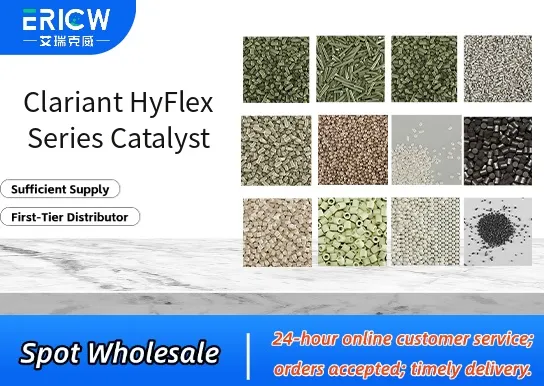
| Product Form | Free-flowing black granular solid |
| Appearance | Uniform black granules, no visible dust or agglomeration |
| Palladium Content | 5.0 wt% ± 0.3 wt% |
| Moisture Content | ≤ 5.0 wt% (as received) |
| Particle Size Range | 20–60 mesh (0.25–0.85 mm) |
| Primary Applications | Hydrogenation, deprotection, and selective reduction in fine chemicals and pharma |
| Storage Conditions | Store under inert atmosphere at room temperature; protect from moisture and oxidizing agents |
Q1: What is the primary function of N-1051 in polyurethane systems?
A: N-1051 is a selective amine-based catalyst designed to promote urethane (polyol–isocyanate) reactions while providing balanced control over gelation and surface cure—particularly beneficial in flexible foam, CASE, and coating applications where cream-to-gel timing and flow characteristics are critical.
Q2: How does N-1051 compare to traditional tertiary amine catalysts like DABCO® 33-LV or TEDA?
A: Unlike highly volatile or strongly gelling amines, N-1051 offers improved hydrolytic stability and reduced odor profile, with moderated reactivity that supports broader processing windows—especially in ambient-cure or moisture-sensitive formulations where premature surface set or blushing must be avoided.
Q3: Is N-1051 compatible with common polyurethane raw materials, including polyester and polyether polyols?
A: Yes, N-1051 demonstrates broad compatibility across standard polyether and polyester polyols, as well as aromatic and aliphatic isocyanates. It is typically used at low concentrations and does not induce significant side reactions such as excessive water sensitivity or discoloration under normal formulation conditions.
Q4: What handling and storage precautions should be observed for N-1051?
A: Store in tightly sealed containers under inert atmosphere (e.g., nitrogen) at room temperature, away from moisture, strong oxidizers, and direct sunlight. As with all amine catalysts, good industrial hygiene practices—including ventilation and appropriate PPE—are recommended during handling to minimize inhalation or skin contact.
Contact With Us:
E-mail: wangxingqiang@ericwchem.com
Have a Questions? Call Us:
Add:
Building A1, Jiete Industrial Park, Huangpu District, Guangzhou City, Guangdong Province, China