English
 Español
 tiếng việt
 русский
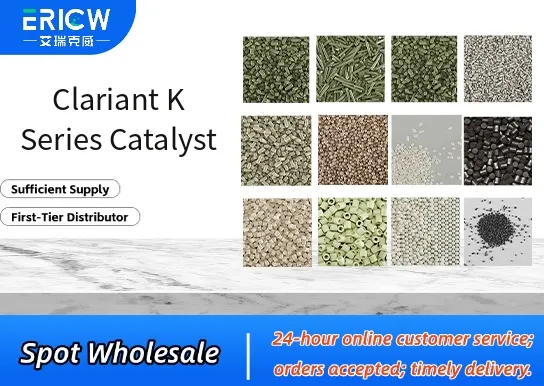
High thermal stability enabling reliable performance in exothermic reaction environments.
Controlled pore structure for optimized mass transfer and reduced diffusion limitations.
Consistent batch-to-batch reproducibility supported by Clariant’s ISO 9001-certified manufacturing.
Low heavy metal impurity content, meeting stringent regulatory requirements for pharmaceutical intermediates.
Tailorable surface acidity profile for selective catalysis in alkylation and isomerization processes.
Fine chemical synthesis, including chiral intermediate production.
Production of high-purity alkylbenzenes for biodegradable detergents.
Catalytic dewaxing in lubricant base oil refining.
Gas-phase dehydration of alcohols to olefins in petrochemical units.
Continuous-flow fixed-bed reactors for sustainable process intensification.
| Chemical Type | Modified solid acid catalyst (zeolite-based) |
| Product Form | Extruded cylindrical pellets (1.8–2.2 mm diameter) |
| Appearance | Off-white to light beige free-flowing granules |
| Primary Applications | Alkylation, isomerization, dehydration, transalkylation |
| Key Features | Acid site density: 0.35–0.45 mmol H⁺/g; BET surface area: 320–380 m²/g |
| Benefits | Extended catalyst life (>18 months in steady-state operation); regenerable via controlled calcination |
| Storage Conditions | Store in sealed containers at 5–30 °C; protect from moisture and direct sunlight |
| Handling Precautions | Use NIOSH-approved dust mask and gloves; avoid inhalation of fine particles |
Q1: What types of polymerization reactions is the K Series Catalyst primarily designed for?
A: The Clariant K Series Catalyst is specifically engineered for Ziegler–Natta-type olefin polymerization, particularly in polypropylene (PP) and ethylene-propylene copolymer production, where high stereoselectivity and controlled molecular weight distribution are required.
Q2: How does the K Series differ from conventional titanium-based Ziegler–Natta catalysts?
A: The K Series features a proprietary supported catalyst system with enhanced electron donor composition and optimized carrier morphology, delivering improved activity, higher isotacticity in PP, and better hydrogen response compared to standard TiCl₄/MgCl₂ systems.
Q3: What is the typical dosage range for the K Series Catalyst in industrial polypropylene processes?
A: Dosage is formulation- and process-dependent, but the K Series is typically used at low concentrations—generally ranging from 0.1% to 2% by weight relative to the total catalyst system—and often enables reduced co-catalyst (e.g., triethylaluminum) requirements.
Q4: Is the K Series Catalyst compatible with modern high-activity gas-phase and bulk slurry polypropylene processes?
A: Yes—the K Series has been successfully implemented in both loop slurry and gas-phase polypropylene processes, offering good particle morphology control, minimal fouling tendency, and consistent performance under varying residence time and temperature conditions.
Contact With Us:
E-mail: wangxingqiang@ericwchem.com
Have a Questions? Call Us:
Add:
Building A1, Jiete Industrial Park, Huangpu District, Guangzhou City, Guangdong Province, China