English
 Español
 tiếng việt
 русский
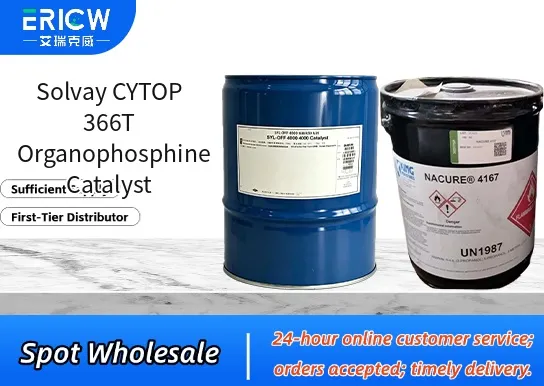
Highly selective for hydrosilylation reactions with minimal side-product formation.
Thermally stable up to 180 °C, enabling robust performance in demanding process conditions.
Low volatility and negligible vapor pressure, enhancing operator safety and handling stability.
Compatible with platinum-free catalytic systems, supporting sustainable and cost-effective silicone synthesis.
Consistent batch-to-batch reproducibility, ensuring reliable process control and product quality.
Hydrosilylation curing of addition-cure liquid silicone rubbers (LSR).
Catalysis in high-transparency optical silicones for LED encapsulation and lens molding.
Production of heat-resistant silicone elastomers for automotive under-hood components.
Controlled crosslinking in medical-grade silicone formulations compliant with ISO 10993.
| Chemical Type | Trialkylphosphine-based organophosphine complex |
| Product Form | Free-flowing white to off-white crystalline powder |
| Appearance | Crystalline solid, homogeneous granular morphology |
| Primary Applications | Hydrosilylation catalysis in silicone polymerization |
| Key Features | Platinum-free, thermally stable, low-volatility catalyst |
| Storage Conditions | Store under inert atmosphere at 5–25 °C, protected from moisture |
| Handling Precautions | Avoid inhalation; use in well-ventilated areas with appropriate PPE |
Q1: What is the primary function of CYTOP 366T in fluoropolymer processing?
A: CYTOP 366T is an organophosphine-based catalyst designed to facilitate controlled crosslinking and thermal stabilization during the melt processing of certain fluoropolymers, particularly perfluoroelastomers (FFKM) and specialty fluoro-copolymers. It helps improve scorch safety and enhances final cure state without compromising high-temperature performance.
Q2: Is CYTOP 366T compatible with common fluoropolymer curing systems such as bisphenol or diamine curatives?
A: Yes, CYTOP 366T is formulated to be compatible with standard fluoropolymer curing chemistries, including bisphenol-based and diamine-based systems. It acts synergistically to modify cure kinetics—often enabling lower cure temperatures or shorter cycle times—while maintaining mechanical integrity and chemical resistance.
Q3: How should CYTOP 366T be incorporated into a fluoropolymer compound?
A: CYTOP 366T is typically added during the masterbatch or final mixing stage under controlled temperature conditions (generally below 80 °C) to avoid premature activation. It is commonly used at low concentrations, and dosage depends on formulation requirements, polymer type, and desired cure profile—typically ranging from 0.1% to 2% by weight relative to the base polymer.
Q4: Does CYTOP 366T require special handling or storage considerations?
A: Yes. As an air-sensitive organophosphine compound, CYTOP 366T should be stored under inert atmosphere (e.g., nitrogen or argon), protected from moisture and elevated temperatures. Containers must remain tightly sealed when not in use, and handling is recommended under dry, glove-box or nitrogen-purged conditions to preserve catalytic activity and shelf life.
Contact With Us:
E-mail: wangxingqiang@ericwchem.com
Have a Questions? Call Us:
Add:
Building A1, Jiete Industrial Park, Huangpu District, Guangzhou City, Guangdong Province, China