English
 Español
 tiếng việt
 русский
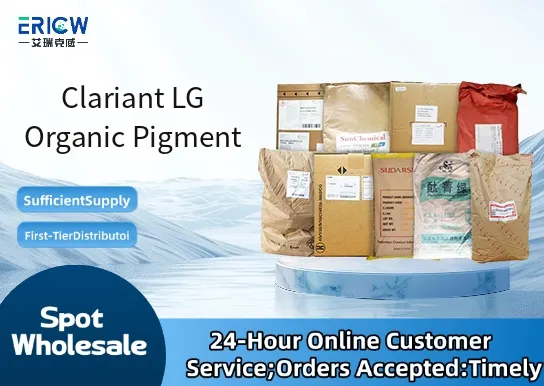
Exceptional color strength and batch-to-batch consistency for reliable formulation performance.
High thermal stability suitable for demanding processing conditions up to 280 °C.
Excellent lightfastness and weather resistance, meeting ISO 105-B02 and ISO 105-A02 standards.
Low volatility and negligible extractables, supporting compliance with global food-contact and toy-safety regulations.
Optimized dispersibility in both polar and non-polar polymer matrices, enabling efficient masterbatch production.
Polyolefin (PP, PE) injection molding and extrusion applications.
Engineering plastics including ABS, PS, and PC for automotive interior components.
Food packaging films requiring FDA-compliant pigments.
Household appliances and consumer electronics housings.
Technical fibers and spunbond nonwovens for industrial textiles.
| Chemical Type | High-performance quinacridone derivative |
| Product Form | Fine free-flowing powder |
| Appearance | Violet-red to deep red powder |
| Primary Applications | Polyolefins, engineering plastics, food packaging |
| Key Features | Thermally stable, low extractables, high chroma |
| Benefits | Reduced dosage, consistent coloration, regulatory compliance |
| Regulatory Status | EU REACH registered; compliant with FDA 21 CFR §178.3290 |
| Storage Conditions | Store in cool, dry place below 30 °C; protect from moisture and direct sunlight |
Q1: What are the primary application areas for Clariant LG Organic Pigments?
A: Clariant LG Organic Pigments are specially developed for high-performance coloration in thermoplastic and thermoset polymers, including polyolefins, engineering plastics, and PVC. They are widely used in automotive interior components, consumer goods, industrial packaging, and technical parts where excellent heat stability, lightfastness, and dispersion characteristics are required.
Q2: How do LG pigments perform under high-temperature processing conditions?
A: LG Organic Pigments are engineered for superior thermal stability, enabling reliable performance during standard melt-processing operations such as injection molding, extrusion, and blow molding. Their molecular structure resists degradation at typical polymer processing temperatures, minimizing color shift and volatile by-product formation.
Q3: Are LG pigments suitable for food-contact or medical-grade applications?
A: Certain grades within the LG series are formulated to meet regulatory expectations for indirect food contact applications, subject to final formulation validation and compliance with applicable regional requirements. For medical or pharmaceutical use, suitability depends on the specific grade, polymer matrix, and end-use conditions — formal regulatory documentation and compatibility testing are recommended prior to qualification.
Q4: What is the typical dosage range for LG pigments in polymer systems?
A: Dosage varies depending on the target shade intensity, polymer type, and processing method, but LG pigments are generally used at low concentrations — typically ranging from 0.1% to 2% by weight — thanks to their high tinctorial strength and efficient dispersion behavior.
Contact With Us:
E-mail: wangxingqiang@ericwchem.com
Have a Questions? Call Us:
Add:
Building A1, Jiete Industrial Park, Huangpu District, Guangzhou City, Guangdong Province, China